As Ghana confronts the escalating threat of illegal small-scale mining — locally known as galamsey — the Ghana Armed Forces (GAF) has commenced an intensive jungle warfare training partnership with the French Embassy aimed at strengthening the fight against destructive mining activities that continue to ravage the country’s forests, water bodies and communities.
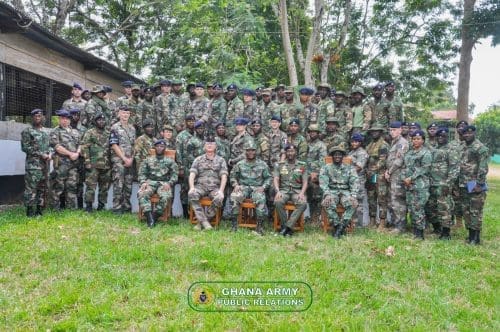
On Tuesday, 20 January 2026, the GAF Jungle Warfare School (JWS), in collaboration with a team of 15 French instructors, three officers and 35 Ghanaian military personnel, began a three-week training exercise at the Seth Anthony Barracks in Akim Achiase in the Eastern Region.


The programme is designed to deepen operational skills, enhance collaboration and build capacity for operations in rugged, forested environments where illegal mining is rampant.
Colonel Grégoire Madelin, French Defence Attaché, said the training will enable officers to better coordinate joint strategies and share operational insights in Ghana’s complex counter-galamsey efforts.
Brigadier General Joshua Amanor, Commander of the Army Training Command, thanked the French military for its partnership in strengthening Ghana’s capacity to protect its natural resources against illegal extraction.
Galamsey’s growing toll on environment and health
Galamsey, originally a small-scale livelihood activity, has ballooned into a national crisis with severe ecological and social consequences.
Recent environmental assessments indicate that more than 60% of Ghana’s water bodies have been polluted by mercury, cyanide and other toxic chemicals used in illicit gold extraction, forcing communities to find alternative, often unsafe, water sources for drinking and agriculture.
Major rivers, including the Pra, Ankobra, Birim, Offin, Densu and Oti — once vital sources of water for domestic use, irrigation and fishing — now flow with contaminated, toxic water, with turbidity levels far exceeding safe treatment thresholds.
Environmental advocates warn that if unchecked, Ghana could face the unthinkable prospect of having to import potable water by 2030 as pollution continues to undermine local supplies.
Forests, farmland and biodiversity under siege
Illegal mining has devastated Ghana’s forests, contributing to large-scale deforestation and biodiversity loss.
Across the country’s 288 forest reserves, over 5,000 hectares have been degraded, and dozens of forests show signs of deep ecological disruption from mining encroachment.
The loss of trees and topsoil has triggered soil erosion, reduced groundwater recharge and depleted land productivity, harming agricultural systems upon which many rural families depend.
The results are visible in once fertile lands that now resemble wastelands of abandoned pits and gullies formed by unregulated digging.
This environmental degradation has also led to food security concerns, as fertile farmlands are lost and fish populations in polluted rivers decline, threatening both nutrition and livelihoods in affected regions.
Public health and human impact
The public health implications are equally alarming. Mercury exposure — prevalent due to its use in gold extraction — has been linked to neurological damage, kidney disease, developmental disorders and other chronic illnesses in communities living close to mining sites.
Healthcare workers have reported surges in respiratory illnesses and waterborne diseases, complicating already stretched health services.
In some rural areas, traditional herbal and medicinal plant species are disappearing as forests are cleared for mining, jeopardising the health practices of communities that rely on these plants for medicine.
The need for sustained action
Despite periodic crackdowns that have reclaimed some forest lands and seized heavy equipment, critics argue that Ghana’s response has lacked sustained political will and enforcement consistency.
Some civil society voices have described government efforts as insufficient, calling instead for stronger legal action, stricter environmental enforcement and substantive alternatives for affected communities.
Military training part of broader effort
The newly launched GAF-France training initiative is part of this broader response.
By equipping Ghanaian troops with tactical jungle warfare and surveillance skills, the aim is to disrupt illegal mining encampments deep within forests and to strengthen enforcement in hard-to-reach terrains where galamsey activities thrive.
Colonel Madelin and Ghanaian commanders underscored that the training not only improves command effectiveness but also reflects international support for Ghana’s environmental security.
As Ghana steps up efforts to protect its natural heritage, the combined challenges of enforcement, ecological rehabilitation and community resilience remain at the centre of national discourse — with the nation’s rivers, forests and future livelihoods hanging in the balance.