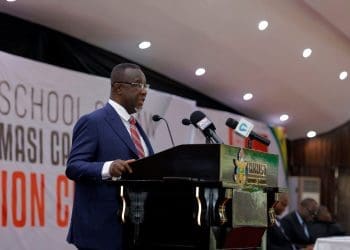

The Chairman of the Special Peace Committee on the protracted Bawku Chieftaincy Conflict, Asantehene Otumfuo Osei Tutu II, has delivered a decisive and non-negotiable recommendation to President John Dramani Mahama, calling on the government to strictly enforce the laws that recognise Zugraan Naba Asigri Abugrago Azoka II as the legitimate Chief of Bawku and head of the Kusasi Traditional Area.
President Mahama, in response, has assured the nation that the government will issue its definitive position on the report within 24 hours, while urging sustained reconciliation efforts to cement lasting peace.

The report, presented on Tuesday at the Jubilee House in Accra, marks the formal conclusion of a high-profile mediation process initiated by the presidency to resolve the decades-old conflict between the Mamprusi and Kusasi factions, a dispute that has claimed many lives, displaced families, and stalled development in Bawku and surrounding communities in the Upper East Region.
Presenting the committee’s findings, the Asantehene anchored his final recommendation squarely on the supremacy of Ghana’s Constitution and the binding authority of the Supreme Court, stressing that peace in Bawku can only be achieved through strict adherence to the rule of law.
Law above all authority
Otumfuo Osei Tutu II made it clear that the committee’s work was guided not by sentiment, political compromise, or traditional diplomacy alone, but by the settled legal position of the state.
He noted that the status of the Bawku skin was conclusively determined by the Restoration of Status of Chiefs Law, PNDC Law 75 of 1983, and later affirmed by the Supreme Court in 2003.
“We chiefs, no matter how exalted, do not live above the Constitution of Ghana and the laws duly enacted and affirmed by the courts,” the Asantehene told President Mahama and senior government officials present at the ceremony.
In a direct appeal to the Nayiri, Naa Mahami Abdulai Sheriga, Overlord of Mamprugu, Otumfuo urged acceptance of the current legal reality, following repeated attempts in recent years to install a rival chief in Bawku.
“The final recommendation, Mr President, is that my brother, the Nayiri, accept the laws as presently constituted, recognising Asigri Abugrago Azoka II as the Chief of Bawku and head chief of the Kusasi traditional area,” the Asantehene stated.
Executive responsibility for peace
Beyond the legal clarity, the Asantehene placed the ultimate responsibility for restoring peace squarely on the shoulders of the Executive.
The report calls for firm and immediate enforcement of the law against any individual or group that seeks to challenge the authority of the legally recognised Bawku Naba.
According to the committee, ambiguity, selective enforcement, or political hesitation has only prolonged the violence, which has intensified since late 2021 and resulted in hundreds of deaths, widespread insecurity, and economic paralysis in parts of the Upper East Region.
“Accordingly, the laws which recognised Asigri Abugrago Azoka II must be enforced by the government of the Republic of Ghana until changed in accordance with the 1992 Constitution or reviewed by the Supreme Court of Ghana,” Otumfuo stressed.
He warned that only decisive and impartial enforcement of the law could de-escalate tensions and break the cycle of retaliatory violence that has plagued Bawku for decades.
The Asantehene traced the roots of the conflict to colonial-era administrative decisions that sought to impose Mamprugu chieftaincy structures over the indigenous Kusasi people of Bawku, a legacy that successive governments have struggled to manage.
However, he emphasised that the Supreme Court’s 2003 ruling has settled the matter beyond dispute and remains binding on all citizens, including traditional authorities.
Voluntary mediation and mutual respect
Otumfuo Osei Tutu II revealed that both the Kusasi and Mamprusi leadership willingly submitted themselves to the mediation process, underscoring the legitimacy and goodwill that underpinned the committee’s work.
“The parties in this dispute have willingly submitted themselves to the mediation process,” he said, describing the consistent engagement of both sides throughout the process.
He praised the Bawku Naba for personally leading his delegations to Manhyia Palace and acknowledged the cooperation of the Nayiri, who, when unable to attend in person, consistently delegated senior elders and chiefs to represent him.
“They all expressed confidence in the process and believed that we would be able to work towards an amicable outcome,” the Asantehene noted.
Warning against inflammatory rhetoric
In a pointed intervention, the Asantehene cautioned former Zebilla Member of Parliament, Cletus Avoka, to exercise restraint in his public commentary on the conflict, warning that careless pronouncements could undermine the fragile peace process.

Speaking during the presentation of the report, Otumfuo said the situation in Bawku remains delicate and requires careful, responsible communication from all influential figures.
“Cletus Avoka has to be very careful in the pronouncements he makes publicly. It is not right. This is a dicey situation, and we are all trying to make amends and get people to move as brothers and sisters,” he said.
He stressed that while the law clearly recognises the Bawku Naba, inflammatory statements that provoke the opposing side would be counterproductive to reconciliation.
“We have reached a time where we all want peace. The Bawku Naba is the Bawku Naba; the law is on his side, and we agree to that. But you do not make pronouncements on the mediation that will incense the other side. What we have reached is more like reconciliation,” the Asantehene warned.
He appealed to all political actors, traditional leaders, and opinion shapers to prioritise unity, patience, and dialogue, reminding them that peacebuilding is a gradual process that demands mutual respect.
Mahama promises swift govt response
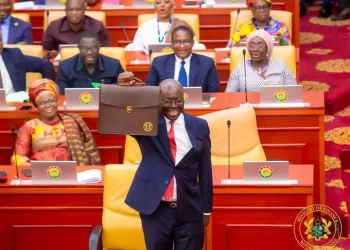
Receiving the report, President John Dramani Mahama welcomed the conclusion of the mediation process and commended the Asantehene for his leadership and commitment to peace.
“I’m pleased that this mediation has come to an end and that he has presented a report,” the President said.
He assured the nation that government would act promptly, announcing that a definitive position on the report would be issued within 24 hours.
“I can assure him that government will look at this report, and within the next 24 hours, government will issue a statement on its definitive position on the report,” President Mahama stated.
While signalling swift action, the President emphasised that the submission of the report should mark the beginning of a deeper reconciliation phase rather than the end of engagement.
He called on the National Peace Council, the National and Regional Houses of Chiefs, religious bodies, and the Asantehene himself to continue facilitating direct engagement between the Nayiri and the Bawku Naba.
“But it’s my hope that the National Peace Council, the House of Chiefs, Otumfuo himself, and all the religious bodies would go the next step of continuing the engagement between the Nayiri and the Bawku Naaba to ensure that we are able to bring reconciliation between the two groups,” the President said.
With the report now in the hands of the President, expectations are high that decisive enforcement of the law, coupled with sustained reconciliation efforts, could finally open a path toward lasting peace, stability, and development in Bawku after decades of conflict.