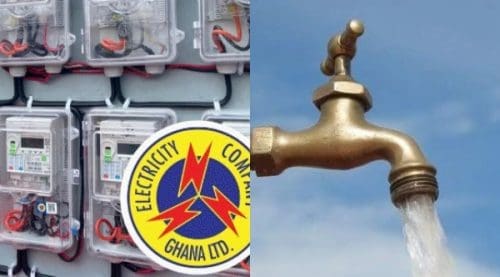
Ghanaians in 2025 have endured a cumulative 18.34% increase in electricity tariffs and a 4.02% rise in water charges, developments that have intensified the cost-of-living crisis at a time when wages remain largely stagnant and disposable incomes are already stretched thin.
The tariff adjustments, approved by the Public Utilities Regulatory Commission (PURC) under its Quarterly Tariff Review Mechanism, have had far-reaching implications for households and businesses alike, raising serious concerns about affordability, industrial competitiveness and the rising cost of locally produced goods.


The first and most significant adjustment took effect on May 1, 2025, when the PURC approved a 14.75% increase in electricity tariffs across all customer categories, alongside a 4.02%rise in water tariffs.
Barely two months later, electricity tariffs were adjusted upward again by 2.45% effective July 1, 2025, as part of the Commission’s routine quarterly review, while water tariffs were held constant for the third quarter.
A further 1.14% increase in electricity tariffs followed on October 1, 2025, bringing the total electricity adjustment for the year to 18.34 per cent, with water tariffs remaining unchanged in the final two quarters.
For households, these increases have translated directly into higher monthly utility bills, compounding the financial strain already caused by elevated food prices, transport fares, rent and other essentials.
With public sector wage adjustments failing to keep pace with inflation and many private sector workers experiencing little or no salary growth, the additional burden of higher electricity and water costs has reduced real incomes and purchasing power.
For low- and middle-income households in particular, utilities now consume a larger share of monthly earnings, forcing difficult trade-offs between basic needs such as food, education, healthcare and energy.
The impact on urban households has been especially pronounced, given their higher dependence on grid electricity and piped water. For many families, higher tariffs have meant cutting back on electricity usage, delaying the replacement of appliances, or resorting to alternative energy sources that are often less efficient or environmentally friendly.
In rural and peri-urban communities, where incomes are generally lower and access to alternative livelihoods limited, the tariff increases have further entrenched vulnerability and energy poverty.
Beyond households, the cumulative tariff hikes have had significant implications for Ghana’s productive sectors, particularly manufacturing, agro-processing, mining, hospitality and small-scale enterprises, all of which are heavily reliant on electricity and water.
Energy is a critical input in production, and sustained increases in tariffs inevitably push up the cost of doing business.
For manufacturers, higher electricity tariffs increase overheads, reduce margins and, in many cases, force producers to pass on the additional costs to consumers through higher prices.
Small and medium-scale enterprises, which form the backbone of Ghana’s economy and employ a substantial proportion of the workforce, have been among the hardest hit.
Many SMEs operate on thin margins and lack the financial buffers to absorb repeated cost increases.
As utility bills rise, these businesses are confronted with difficult choices: increase prices and risk losing customers, cut back on production, lay off workers, or, in extreme cases, shut down operations altogether.
Each of these outcomes carries broader economic and social consequences, including job losses and reduced economic activity.
The effect on the cost of production has also had implications for Ghana’s industrial competitiveness.
As locally produced goods become more expensive due to higher input costs, they struggle to compete with imported alternatives, particularly from countries where energy costs are lower or heavily subsidised.
This dynamic undermines the objectives of Ghana’s industrialisation agenda and import substitution efforts, as consumers increasingly opt for cheaper foreign products despite government calls to “buy made-in-Ghana goods”.
In the manufacturing sector, the rising cost of electricity has weakened Ghanaian firms’ ability to compete both domestically and within the sub-region.
Producers who rely on continuous power supply for machinery, cold storage, processing and packaging face escalating operational costs that erode their competitiveness under the African Continental Free Trade Area (AfCFTA).
Rather than positioning Ghana as a manufacturing hub, high utility costs risk making local industries less attractive compared to counterparts in neighbouring countries with more stable or affordable energy pricing.
The agricultural and agro-processing sectors have not been spared.
Increased electricity and water tariffs raise the cost of irrigation, processing, storage and transportation, contributing to higher food prices at a time when food inflation remains a major concern for households.
This creates a vicious cycle in which higher utility tariffs feed into higher food prices, further worsening the cost-of-living pressures on consumers.
The PURC has defended the tariff adjustments as necessary and consistent with its regulatory mandate.
The Commission’s Quarterly Tariff Review Mechanism is designed to track changes in four key variables: the cedi-dollar exchange rate, inflation, the electricity generation mix and fuel costs, particularly natural gas.
According to the regulator, the mechanism is intended to prevent both under-recovery and over-recovery of revenues by utility companies.
Under-recovery, the PURC argues, undermines the financial viability of utility providers and their ability to supply reliable electricity and water, potentially leading to outages and service disruptions.
Over-recovery, on the other hand, unnecessarily burdens consumers.
The quarterly adjustment process is therefore meant to maintain the real value of tariffs over time, ensuring that utilities can cover legitimate costs while avoiding sharp, one-off tariff shocks.
However, critics contend that while the regulatory rationale may be sound, the cumulative impact of repeated increases within a single year places an excessive burden on consumers and businesses, particularly in an economy where income growth lags behind inflation.
They argue that the current tariff adjustment framework pays insufficient attention to affordability, productivity and the broader macroeconomic consequences of rising utility costs.
As Ghana grapples with the twin challenges of stabilising its economy and promoting industrial growth, the 18.34% electricity tariff increase and 4.02% water hike in 2025 have highlighted the delicate balance between ensuring utility sector sustainability and protecting consumers from rising living and production costs. Without corresponding improvements in wages, productivity and efficiency, higher utility tariffs risk deepening economic hardship for households, weakening local industries and making Ghanaian goods increasingly uncompetitive in both domestic and international markets.