The Bank of Ghana (BoG) has injected close to US$10 billion into the economy since January 2025 in one of its most aggressive interventions in recent history, aimed at stabilising the foreign exchange market, meeting critical payment obligations, and rebuilding the country’s external buffers to withstand economic shocks.
The intervention, which largely supported payments to Independent Power Producers (IPPs) and bondholders, contributed to a sharp improvement in currency stability and helped lift Ghana’s Gross International Reserves (GIR) to US$13.8 billion by the end of 2025, strengthening the country’s external position after years of volatility.


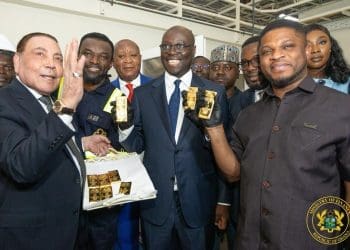
Alongside foreign currency inflows, the Central Bank significantly expanded its gold holdings, with reserves rising to 37.06 tonnes by September 2025, representing about one-third of total reserves.
The move signals a deliberate strategy to diversify reserve assets and reduce exposure to fluctuations in major foreign currencies.
However, the aggressive buying and selling of gold to raise foreign exchange for cedi defence has come at a steep cost, raising concerns about the long-term financial implications of the strategy.
Gold trading losses trigger IMF warning
On the downside, the Central Bank’s gold trading operations have resulted in colossal losses, according to an International Monetary Fund (IMF) report, which revealed that between January and September 2025, the Bank of Ghana incurred losses amounting to US$214 million from gold-related transactions.
The IMF cautioned that while the gold-for-liquidity strategy has helped stabilise the currency, persistent losses could weaken the Central Bank’s balance sheet and undermine reserve sustainability if not addressed through reforms and tighter cost controls.
BoG defends strategy before Parliament
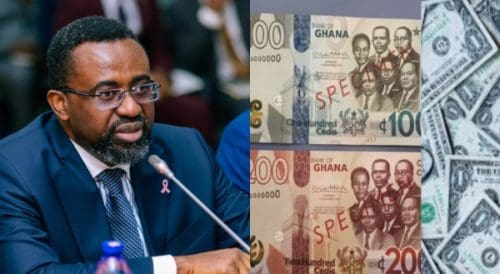
Appearing before Parliament’s Public Accounts Committee (PAC) in Accra on Monday, the Governor of the Bank of Ghana, Dr Johnson Pandit Asiama, together with the Head of Financial Markets, Nii Sowah Ahorlu, defended the scale of the intervention, describing it as a necessary response to restore market confidence and stabilise macroeconomic conditions following prolonged instability.
“Relative to last year, we have had significant intermediation processes, and that is what we have observed in terms of the stability and appreciation we have incurred,” Mr. Ahorlu told the Committee.
“In terms of our support for the market this year, overall it has been close to US$10 billion.”
The appearance formed part of the PAC’s public hearings into the Auditor-General’s reports on the Public Accounts of Ministries, Departments and Agencies for the year ended December 31, 2024, scheduled to run from Monday, January 12, to Tuesday, January 13.
Cedi stability and confidence gains
One of the most immediate benefits of the BoG’s intervention has been the stabilisation of the cedi, which appreciated by 13.9% against the US dollar in October 2025, reversing earlier depreciation pressures and easing speculative attacks on the currency.
Economists say the sustained supply of foreign exchange improved market liquidity, reduced volatility, and reassured both domestic and foreign investors that the Central Bank remained committed to defending macroeconomic stability.
The rise in reserves to $13.8 billion has also strengthened Ghana’s capacity to finance imports, service external debt, and respond to unforeseen shocks, particularly at a time when global markets are strained by geopolitical tensions, commodity price swings, and tighter international financial conditions.
Gold reserves as a shock absorber
The expansion of gold reserves to 37.06 tonnes has been widely viewed as a strategic buffer against external shocks.
By holding a larger share of reserves in gold, the BoG has insulated part of its portfolio from currency risk and reduced reliance on traditional foreign exchange inflows such as Eurobonds and donor financing.
Analysts argue that gold-backed reserves provide a stabilising anchor during periods of financial stress, offering both liquidity and value preservation when conventional currencies weaken or capital flows reverse.
Costs and risks of heavy intervention
Despite the short-term gains, the scale of intervention has sparked debate about sustainability.
Injecting nearly US$10 billion within a single year places significant pressure on reserve buffers, particularly if inflows from exports, remittances, and foreign investment fail to match the pace of outflows.
Continuous Central Bank support also risks creating market dependence, where currency stability hinges on intervention rather than strong economic fundamentals.
There are fiscal implications as well. Persistent foreign exchange support for IPPs and bondholders highlights deeper structural weaknesses in public finance management, effectively transferring fiscal pressures onto the Central Bank’s balance sheet.
Critics warn that without complementary fiscal discipline, export diversification, and productivity-led growth, prolonged intervention could erode reserve adequacy over time and limit the BoG’s ability to respond to future crises.
Balancing stability with structural reform
Dr Asiama emphasised that while intervention remains necessary, it is not a substitute for deeper structural reforms aimed at strengthening Ghana’s economic fundamentals.
According to him, the Bank’s strategy is designed to buy time—restoring confidence, stabilising expectations, and rebuilding buffers—while broader fiscal consolidation and structural adjustments take root.
As Ghana works to consolidate its recovery, policymakers face a delicate balancing act: defending stability today while preserving sufficient reserves to withstand tomorrow’s shocks.
Whether the current strategy delivers lasting macroeconomic resilience or merely temporary relief will depend on how quickly reforms are implemented to align currency stability with sustainable economic growth.