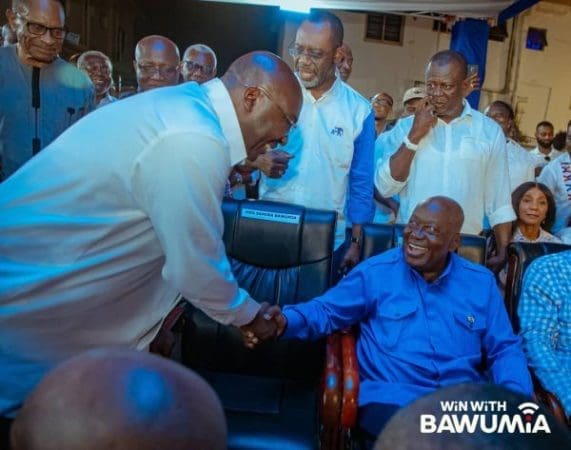
Former Vice-President Dr Mahamudu Bawumia has emerged from one of the most bruising internal contests in the history of the New Patriotic Party (NPP) with a decisive victory, securing the party’s presidential ticket for the 2028 general elections after surviving sustained political onslaughts from all four of his challengers, many of whom openly or subtly blamed him for the party’s defeat in the 2024 national elections.
In a nationwide primary conducted on Saturday, January 31, 2026, Dr Bawumia polled 110,643 votes out of the 195,901 valid votes cast, representing 56.643% underlining a commanding endorsement by party delegates.


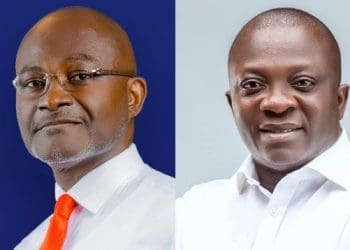
His closest rival, outspoken former Assin Central Member of Parliament (MP) Mr Kennedy Ohene Agyapong, came second with 46,554 votes (23.76%), while former Minister for Food and Agriculture Dr Bryan Acheampong placed third with 36,303 votes (18.53%).
Former Education Minister Dr Yaw Osei Adutwum garnered 1,999 votes (1.02%) to place fourth, and veteran party figure Mr Kwabena Agyei Agyapong trailed with 402 votes (0.21%).
Out of a total of 196,462 ballots cast, 561 were rejected making valid votes cast 195,901, according to official figures released by the Electoral Commission (EC).
Dr Bawumia won convincingly in 14 of the 16 regions, conceding only the Central Region to Mr Agyapong and the Volta Region to Dr Acheampong—an outcome that highlighted both the breadth and depth of his support across the party’s national structure.
Dr Bawumia Vrs Agyapong comparative analysis
A closer look at the voting patterns from the last two NPP primaries reveals a shift in internal dynamics that goes beyond the headline victory of Dr Bawumia in 2026 and offers deeper insight into how party delegates recalibrated their choices over time.
A comparative analysis of the 2023 and 2026 primaries shows that the contest was held on an expanded electoral base. Following constitutional amendments, the NPP increased its delegates list from 204,144 in 2023 to 211,849 in 2026—an addition of 8,243 delegates intended to broaden participation and strengthen internal democracy.
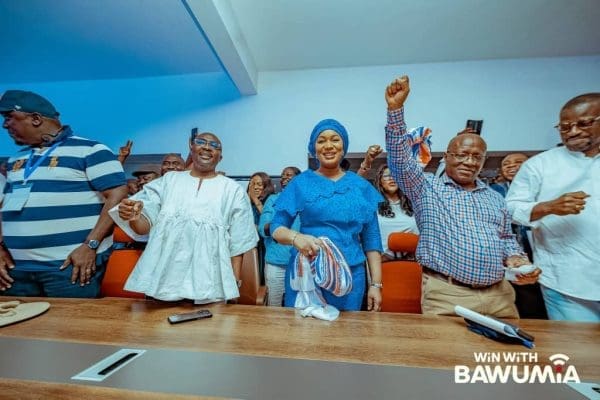
Despite the larger voter pool, turnout patterns remained broadly consistent.
In the 2023 primary, 192,446 valid votes were cast out of the 204,144 delegates qualified to vote.
In 2026, the number of valid votes rose modestly to 195,901 out of 211,849 eligible delegates.
This represents an increase of 3,455 valid votes between the two contests, suggesting that while the party expanded its base, overall participation grew at a measured rather than dramatic pace.
Within this slightly enlarged and more diverse electorate, the individual performances of the two leading contenders—Dr Bawumia and Mr Agyapong—tell a more nuanced story.
Dr Bawumia, who again emerged victorious in 2026, recorded a decline in raw vote numbers compared to his 2023 showing.
His tally fell by 7,567 votes, from 118,210 in 2023 to 110,643 in 2026.
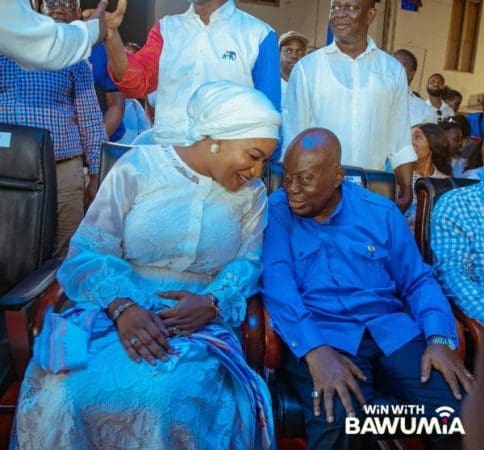
Party analysts interpret this dip not as a collapse in support, but as a reflection of the more competitive and crowded nature of the 2026 race, as well as the impact of sustained internal criticism following the party’s 2024 electoral defeat.
By contrast, the shift in support for Mr Agyapong was far more pronounced.
The former Assin Central MP saw his vote count drop by 25,442—from 71,996 in 2023 to 46,554 in 2026—despite the increase in the overall number of delegates and valid votes.
The scale of that decline suggests that while his message resonated strongly with sections of the grassroots in 2023, it failed to retain or expand that appeal across the broader, reconfigured delegate base three years later.
Taken together, the figures indicate that Dr Bawumia’s support, though slightly reduced in absolute terms, proved more resilient within the party’s evolving internal structure, while Mr Agyapong’s backing contracted significantly as delegates weighed continuity, experience and electability more heavily in 2026.
A contest framed around blame and survival
The scale of Dr Bawumia’s victory is particularly striking given the political context in which the primary was held.
Unlike previous NPP contests that focused largely on ideology, experience or regional balance, the 2026 primary was shaped heavily by recriminations over the party’s loss of power in the 2024 general elections.
Throughout the campaign, all four contenders—directly or indirectly—anchored their messaging on the argument that the NPP’s electoral defeat was linked to Dr Bawumia’s stewardship as Vice-President and, ultimately, as the party’s 2024 presidential candidate.
From economic hardships to public debt, currency instability and voter fatigue after two terms in office, the criticism was relentless.
Mr Agyapong presented himself as the anti-establishment candidate, arguing that the party had lost touch with its grassroots under the “Bawumia-led economic management team.”
Dr Acheampong framed his bid around the need for a “reset” after what he described as an era of technocratic elitism that failed to resonate with ordinary voters.
Dr Adutwum and Mr Agyapong, though less combative, similarly suggested that new leadership was required to heal the party’s wounds and reconnect with the electorate.
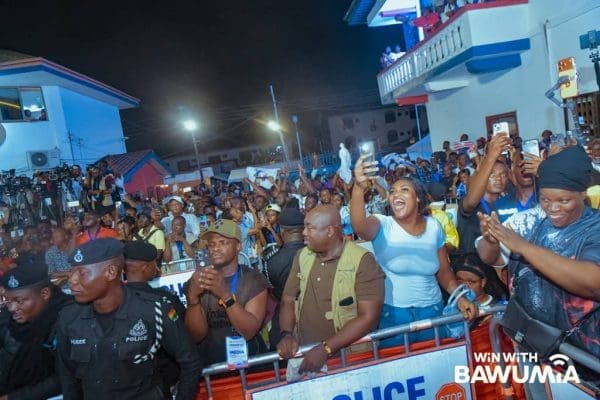
For months, Dr Bawumia stood at the centre of this internal storm—defending his record, absorbing criticism from all flanks, and resisting calls from within sections of the party that he step aside to allow a “fresh face” to lead the NPP into opposition and eventual recovery.
That he not only withstood this pressure but emerged with over 56% of the vote has fundamentally reshaped the internal balance of power within the party.
A victory broader than the numbers
Analysts who had predicted a tight two-horse race between Dr Bawumia and Mr Agyapong were forced to revise their assumptions as results from constituency after constituency confirmed the former Vice-President’s dominance.
The geographical spread of his victory—cutting across the party’s traditional strongholds and swing regions alike—reinforced the perception that, despite the economic and political baggage of the past, Dr Bawumia retained deep reservoirs of trust within the NPP’s delegate base.
More importantly, the outcome signalled that a majority of delegates rejected the narrative that pinned sole responsibility for the party’s defeat on Dr Bawumia.
Instead, their votes suggested a belief that the NPP’s 2024 loss was the product of broader structural and political factors, rather than the failings of one individual.
It was this undercurrent that shaped the tone of Dr Bawumia’s acceptance speech on Saturday night—an address that focused less on vindication and more on reconciliation and survival.
From triumph to truce
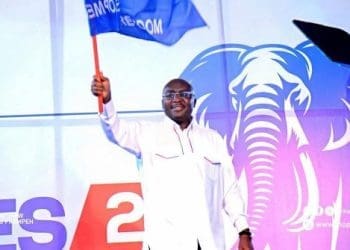
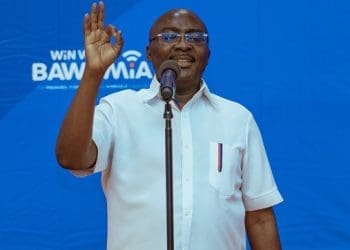
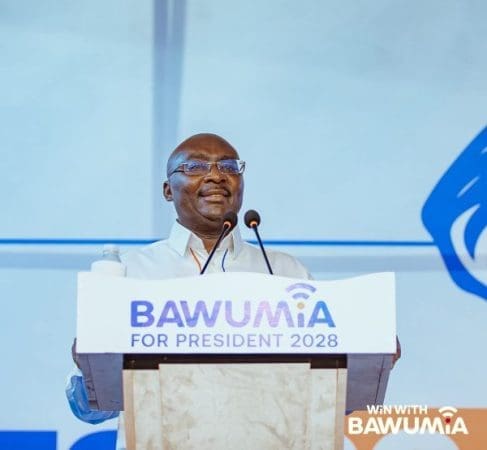
Standing before supporters at the party’s national headquarters shortly after the Electoral Commission officially certified the results, Dr Bawumia extended an olive branch to his rivals and their supporters, declaring that the time for internal contestation had ended and the era of cooperation had begun.
“The strength of the party lies in unity,” he told supporters amid thunderous applause. “Together we stand, divided we fall.”
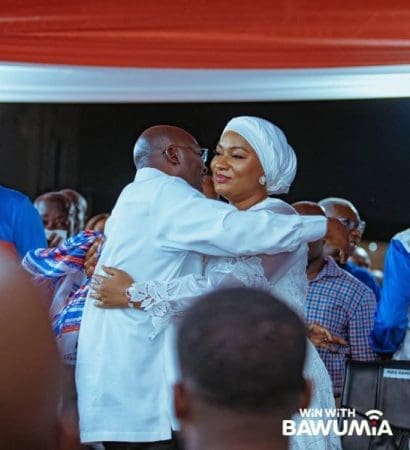
He acknowledged the intensity of the campaign, which at times saw sharp exchanges between rival camps, particularly between supporters of “Team Ken” and his own backers.
He urged the more than 190,000 delegates who took part in the exercise to bury the hatchet and see the primary for what it was—a family contest necessary for renewal.
“This election was not about individuals,” he said.
“It was about the survival of the New Patriotic Party and its future.”
Dr Bawumia specifically reached out to those who may feel aggrieved by the outcome, appealing to them to place the party’s long-term objective—reclaiming power in 2028—above personal disappointment or factional loyalty.
“I appeal to delegates and supporters across the country to let go of any reservations they may have and unite behind the party’s vision,” he said, stressing that conditional loyalty could only weaken the NPP at a critical moment in its history.
Discipline as a political strategy
Central to Dr Bawumia’s post-victory message was a strong emphasis on discipline—an issue that has increasingly preoccupied the party’s leadership following years of internal dissent, public disagreements and mixed messaging.
“I will work with party leadership at all levels to bring discipline to our party,” he declared, warning that indiscipline in operations, communication and conduct could undermine the NPP’s chances in the next general election.
“An army that lacks discipline will struggle to win its battles,” he said, drawing a direct parallel between internal cohesion and electoral success.
He cautioned supporters against excessive or provocative celebrations that could deepen existing divisions, reminding them that, in his view, “as far as I am concerned, everybody has won.”
Rebuilding trust after defeat
Dr Bawumia’s election as flagbearer places a heavy responsibility on his shoulders—not only to lead the party back to power but to rebuild trust among members who remain sceptical of his candidacy.
In his speech, he acknowledged this challenge, describing his victory as a “broad-based mandate” that he must now use to heal divisions and re-energise the party’s grassroots.
“My election today communicates a broad-based appeal across the party, and I need to draw directly on that capital to unite the party as one of the crucial steps to winning power in 2028,” he said.
He announced plans for targeted engagements with party elders, constituency executives, polling station officers and, crucially, the youth—whom he described as central to the NPP’s future relevance.
“As flag bearer, I will do everything to ensure that the NPP listens more to you, is more mindful of your views and is more reflective of your desires,” he told younger supporters, assuring them that reforms had already begun.
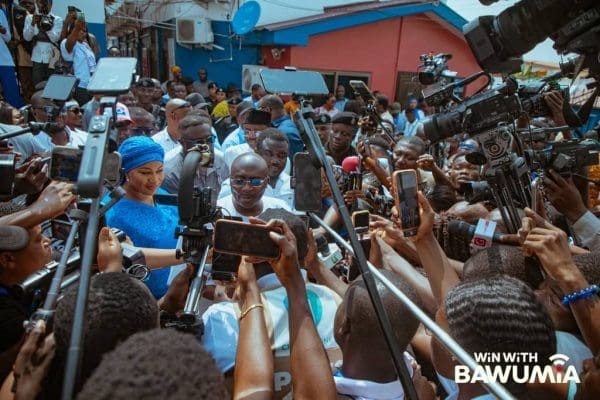
A test run for 2028
The primary itself was a massive logistical exercise, conducted across 333 polling centres in all 275 constituencies under the exclusive supervision of the Ghana Police Service.
Party officials and observers described the process as transparent and credible, with only isolated incidents reported despite the high stakes involved.
For Dr Bawumia, the smooth conduct of the election and the clarity of the outcome provide a stable platform from which to begin the long road back to the Jubilee House.
At 62, the former Vice-President brings to the race a blend of technocratic experience and political longevity.
An economist by training, he previously worked at the Bank of Ghana, rising to the position of Deputy Governor before entering frontline politics.
He served two terms as Vice-President from January 2017 to January 2025 and was a central figure in the NPP’s economic messaging both in opposition and in government.
His tenure in office was marked by an aggressive digitalisation agenda, including the national digital address system, mobile money interoperability and the paperless port system—initiatives aimed at expanding financial inclusion and improving state efficiency.
A new contest ahead
With the internal battle settled, attention is already shifting to the broader political landscape and the 2028 general elections.
Unlike previous contests, Dr Bawumia will not face former President John Dramani Mahama, who is expected to step aside after leading the National Democratic Congress (NDC) in multiple elections.
The prospect of a new NDC candidate introduces fresh uncertainty into the political equation, depriving both parties of the familiar dynamics that have defined Ghana’s elections for over a decade.
For Dr Bawumia, this represents both a challenge and an opportunity: a challenge because he must contend with an unknown opponent unburdened by past presidential losses, and an opportunity because the NPP can recalibrate its message for a changing electorate.
His decisive victory in the primary, achieved in the face of sustained internal criticism, suggests that the party has chosen continuity tempered with reform rather than a complete break from the past.
Whether that choice resonates with the broader Ghanaian electorate in 2028 will depend on Dr Bawumia’s ability to transform internal unity into a compelling national vision—one that acknowledges past shortcomings while offering credible solutions for the future.
For now, however, one conclusion is clear: after months of blame, pressure and political crossfire, Dr Bawumia has not only survived the NPP’s internal reckoning—he has emerged firmly in command of its future.