Confusion surrounding the death and funeral arrangements of highlife icon Charles Kwadwo Fosu, popularly known as Daddy Lumba, has deepened as members of his immediate family have dragged key figures to court, alleging secrecy, mismanagement and attempted hijack of the late musician’s memorial processes.
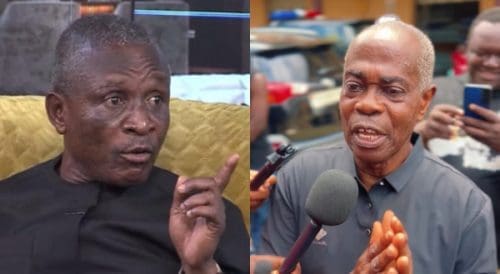
In a writ filed ahead of a court appearance scheduled for Thursday, December 11, 2025, the plaintiffs—Obaapanin Afia Adomah, Robert Gyamfi (also known as Wofa Yaw Poku), Georgina Gyamfi, Ernestina Fosuh and Nana Afia Kobi—are seeking sweeping interlocutory injunctions against Kofi Owusu, described in the suit as head of the wider family, as well as CalBank and Transitions Funeral Home.

The plaintiffs insist they are the immediate principal family members of the musician, who died on July 26, 2025.
Central to the dispute is an account at CalBank under the name “DL Foundation,” into which donations from the one-week celebration of the late music legend were deposited.
The immediate family claims Kofi Owusu formed a committee without their knowledge to organise the one-week rites, manage contributions and control the bank account.
They say monies were withdrawn without authorisation and that all attempts to get Owusu to account for the funds have been unsuccessful.
The family is therefore asking the court to restrain CalBank from releasing any money from the DL Foundation account to Owusu, and to prevent him, his agents, or any assigns from interfering in the planning, organisation and conduct of the final funeral rites of Daddy Lumba.
They further seek to block Owusu from accessing any other accounts belonging to the Daddy Lumba Memorial Foundation LBG.
The litigation has also extended to the handling of the musician’s body.
The plaintiffs want the court to stop Transitions Funeral Home from releasing the corpse to Owusu or anyone acting on his behalf until the suit is determined.
They argued that the control over the body and funeral arrangements has become contentious because the wider family head continues to act unilaterally despite opposition from the immediate family.
Underlying the dispute is a deeper grievance over the circumstances of Lumba’s death.
According to the writ, even before the immediate family was officially informed of the passing of Lumba, an autopsy had already been conducted without their knowledge or consent.
Disturbed by the lack of communication and what they describe as procedural irregularities, they have complained to the Homicide Division of the Ghana Police Service, calling for a full investigation to ascertain the true cause of death.
Tensions escalated further when, according to the plaintiffs, the committee formed by Owusu to manage the one-week celebration was dissolved at the Manhyia Palace.
A new funeral committee was put in place afterwards, but the plaintiffs claim that Owusu has continued to retain funds and authority previously under his control.
They fear that unless restrained by the court, he will continue to, in their words, “squander all the monies in the account,” leaving nothing for the organisation of the final funeral rites.
What should have been a unified period of mourning for one of Ghana’s most beloved musicians has instead evolved into a bitter contest over control, transparency and legitimacy.
The legal battle adds yet another layer to the swirling confusion, deepening the mystery around both Lumba’s death and the handling of his funeral arrangements.
As the case heads to court, fans and observers alike are left watching an increasingly tangled dispute play out—one that threatens to overshadow the legacy of a man whose music unified generations.