A major accountability storm has erupted at the Minerals Income Investment Fund (MIIF) after the Auditor-General issued an unusually sharp reprimand, accusing the Fund of attempting to revise already audited and signed financial statements for the 2024 fiscal year.
The move, which the Auditor-General described as “improper,” has set off intense scrutiny over transparency within the institution responsible for managing Ghana’s mineral royalties.


The controversy traces back to September 2025, when a former MIIF board member filed a lawful Right to Information (RTI) request seeking access to the Fund’s 2024 audited financial statements. MIIF failed to respond.
A subsequent request seeking proof of the Fund’s compliance with its statutory reporting obligations was also ignored. According to sources familiar with the matter, the silence was deliberate—an effort to prevent the release of documents that would contradict what they described as a manufactured narrative of mismanagement by the Fund’s previous administration.
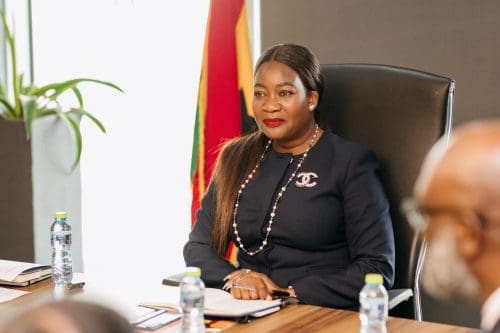
It was after these ignored requests, and with mounting pressure for transparency, that MIIF’s Chief Executive Officer, Justina Nelson, allegedly sought an extraordinary remedy: asking the Ghana Audit Service to revise the financial statements—even though both MIIF and the Auditor-General had already signed them.
Documents reviewed by this newspaper confirm that the 2024 financial statements were signed by MIIF’s Board Chairman and CEO on 26 June 2025, and by the Auditor-General on 27 June 2025, marking the completion of the audit and authorising the statements for statutory publication.
Yet on 31 October 2025, MIIF wrote to the Auditor-General claiming the signed accounts contained “material and pervasive misstatements capable of misleading users,” and requested a full “review and restatement.”
The Ghana Audit Service flatly rejected the claims.
At a meeting on 7 November 2025, MIIF officials pressed their case, but auditors disagreed emphatically, insisting that no material misstatements existed.
This position was later formalised in a letter dated 12 November and delivered to MIIF the following day.
In that letter, the Audit Service stated that MIIF’s allegations were misleading and that the issues raised did not amount to any misstatement capable of misleading the public.
It further criticised MIIF’s use of the term “pervasive” as inappropriate and inaccurate, and condemned the attempt to alter signed accounts as “improper.”
The Auditor-General concluded unequivocally that the 2024 audited statements would not be changed, although the Service expressed willingness to support MIIF in preparing its 2025 accounts.
While MIIF confirmed the exchanges with the Audit Service, it declined to comment on the substance, citing confidentiality.
It also acknowledged responding to the Auditor-General’s letter but refused to disclose its position.
Meanwhile, sources say MIIF’s own legal advisers—OSAD Legal Services, led by former Internal Audit Agency Director-General Dr. Eric Oduro Osae—warned management repeatedly against seeking a restatement of the signed accounts.
Despite that guidance, CEO Justina Nelson and her team reportedly pressed ahead, determined to reframe the Fund’s financial performance in a manner that would cast blame on the previous administration.
The Auditor-General’s uncompromising stance has now brought the issue into full public view, raising pressing questions about MIIF’s transparency, its respect for statutory processes, and its commitment to safeguarding Ghana’s mineral revenues.
As a sovereign investment entity managing the country’s mineral royalties, MIIF is legally mandated to uphold the highest standards of integrity and accountability.
Yet its leadership is now accused of ignoring RTI requests, attempting to alter a completed audit, misrepresenting financial concerns, and seeking to manipulate public perception—all actions that fundamentally undermine confidence in the institution.
The matter now sits squarely before President John Dramani Mahama, who faces growing calls to defend the independence of state institutions and enforce accountability.
Whether he will intervene, and how decisively, may determine not only the credibility of MIIF’s current management but also international confidence in Ghana’s broader governance of extractive revenues.
For now, the Auditor-General’s position is unmistakable: the 2024 audited financial statements remain final—and any attempt to rewrite them is improper, unwarranted, and rejected in full.