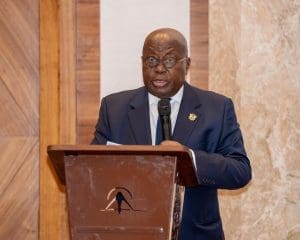
Ato Forson announces GH¢30bn New Economy programme

Minister for Finance and Economic Planning, Dr Cassiel Ato Forson
Finance Minister Cassiel Ato Forson has unveiled plans to commit GH¢30 billion to the New Economy programme in 2027, with a focus on expanding businesses, boosting exports and creating employment opportunities.
Addressing Parliament on Thursday, November 12, during the presentation of the 2027 Budget Statement and Economic Policy, he said the investment would provide the foundation for Ghana’s economic transformation and support the government’s development agenda.
Ato Forson indicated that the funding would form part of a broader investment programme spanning 2027 to 2030. He said the government remained committed to pursuing economic transformation while safeguarding macroeconomic stability and preserving the progress made in stabilising the economy.
He stressed that the implementation of the programme would be guided by strict accountability measures, including rigorous project appraisal and value-for-money assessments.
The Finance Minister further assured Parliament that government spending would be properly budgeted, authorised and transparently reported to ensure public funds are directed towards strategic investments with significant national benefits.
Commercial agriculture will be one of the major beneficiaries of the programme, as the government seeks to harness its potential to drive growth, create jobs and expand Ghana’s export capacity.
“Next year, we will invest GH¢30 billion into the New Economy. This will finance the foundation for the economic transformation needed to expand businesses, increase exports and create jobs for the Ghanaian people. Out of the US$10 billion equivalent, US$3 billion of that amount will be invested in Pillar Two, Commercial Agriculture,” he said.
He noted that commercial agriculture has far-reaching economic benefits, extending to transportation, processing, packaging, trade and other rural services that sustain livelihoods and support businesses.
However, Ato Forson expressed concern over Ghana’s continued expenditure of billions of dollars on food and agricultural imports, arguing that many of these products could be produced competitively within the country.
He said the situation places additional pressure on the cedi, leaves the economy vulnerable to international price fluctuations and denies local businesses and communities opportunities to grow.
According to him, reducing unnecessary food imports would stimulate domestic production and create economic opportunities throughout the agricultural value chain, from farmer financing and factory operations to transportation and job creation.
“Every avoidable import is more than a customs entry into our country. It is a farm that was not financed, a factory that remained idle, a transport contract that was never signed and a job that was created elsewhere,” he told Parliament.