AI in traditional medicine: HCOWA explores new frontiers
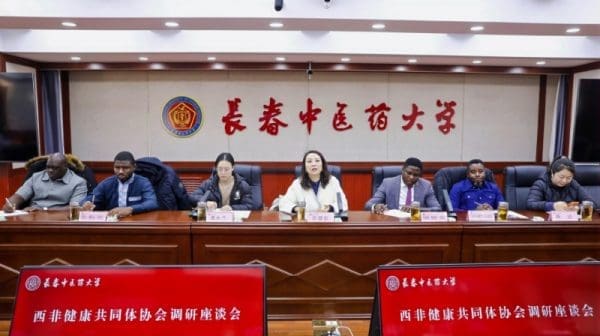
The Health Community of West Africa Association, a non-profit organisation committed to advancing healthcare development and cooperation across the region, is exploring the potential of artificial intelligence to support Ghana’s healthcare sector, with particular interest in its application in traditional medicine.
Through its engagement with Chinese healthcare and technology partners, the Association is seeking to promote knowledge exchange and examine how emerging technologies can contribute to the diagnosis, treatment and scientific development of traditional medical practices.
Artificial intelligence is creating new opportunities in healthcare, including medical diagnosis, treatment planning, patient monitoring and research. Its growing application in Traditional Chinese Medicine (TCM) presents an interesting opportunity for Ghana to explore how indigenous medical knowledge can be supported by scientific research, technological innovation and international collaboration.
For Ghana, this presents an opportunity to explore how indigenous medical knowledge can benefit from technological innovation, scientific research and international cooperation. China’s experience with Traditional Chinese Medicine (TCM), in particular, offers useful lessons on how artificial intelligence can support traditional medical practices while creating opportunities for further research and innovation.
AI and the changing face of Traditional Chinese Medicine
Traditional Chinese Medicine has a long history of using herbal formulations, acupuncture, pulse assessment, tongue examination and other therapeutic approaches. As China continues to explore ways of modernising its healthcare system, researchers are investigating how artificial intelligence can support some of these established practices.
One important area is AI-assisted diagnosis. Traditional Chinese Medicine practitioners have historically relied on the assessment of symptoms, tongue appearance, pulse characteristics and other indicators to understand a patient’s condition.
Today, researchers are exploring AI systems capable of analysing tongue images, facial characteristics and pulse-related data to identify patterns associated with traditional diagnostic classifications. Through machine learning and image recognition, these systems may help practitioners interpret clinical information more consistently and support their diagnostic assessments.
Another emerging area is AI-assisted treatment planning. By analysing patient information, symptoms, medical history and traditional diagnostic classifications, AI systems could help practitioners consider appropriate treatment options within established TCM frameworks.
This includes the analysis of herbal prescriptions, combinations of medicinal plants and individualised treatment approaches. AI can also help researchers examine the relationship between herbal compounds and potential biological targets, providing a basis for further investigation into their therapeutic properties. These developments could improve the way traditional medicine is researched and practised. However, AI is intended to support the professional judgement of qualified practitioners, not replace them. Its clinical reliability and effectiveness must be established through appropriate research and validation.
What this means for Ghana
Ghana has considerable indigenous knowledge of herbal medicine and traditional healthcare practices. This knowledge represents an important resource for research and healthcare development.
Artificial intelligence could create new opportunities to document, analyse and investigate this knowledge. For example, AI-assisted systems could support the analysis of medicinal plants, help researchers identify compounds for further study and examine possible interactions between herbal preparations and conventional medicines.
There is also potential to develop locally relevant AI systems that incorporate properly researched information about Ghanaian medicinal plants and traditional practices. Such systems could eventually support practitioners in reviewing clinical information, assessing treatment outcomes and making better-informed decisions.
AI-assisted diagnostic tools could also be explored in traditional medicine settings, drawing on relevant clinical indicators and validated diagnostic information. Digital platforms could help practitioners maintain patient records, identify patterns in treatment outcomes and monitor patients over time.
However, these possibilities require careful development. AI recommendations must not be mistaken for proven treatments. Any system intended for clinical use must be supported by reliable data, scientific assessment and appropriate regulatory oversight. Patients must remain protected against unsafe or unverified medical interventions.
HCOWA’s role in advancing AI-enabled healthcare
Within this emerging healthcare landscape, the Health Community of West Africa Association is championing the adoption of artificial intelligence and international technological collaboration to support healthcare development in Ghana.
Through its engagement with Chinese medical and technology partners, the Association is exploring opportunities to introduce AI-enabled solutions into hospitals and clinics. One of its major initiatives is an AI hospital project with the ambition of supporting up to 300 hospitals and clinics across Ghana.
The initiative reflects a broader effort to encourage the use of technology in healthcare, including improved access to medical information and clinical decision-support solutions. Although the hospital AI project is distinct from the specific application of AI in Traditional Chinese Medicine, both areas form part of the wider conversation about how artificial intelligence can contribute to healthcare delivery.
The Association’s engagement with Chinese healthcare institutions also provides opportunities to explore further cooperation in medical technology, specialist training, traditional medicine research and AI-supported healthcare development.
Through these partnerships, Ghanaian institutions could benefit from international expertise while contributing local knowledge, research priorities and practical experience to the development of solutions suited to the country’s healthcare needs.
The need for responsible integration
Despite the opportunities, integrating artificial intelligence into traditional medicine must be guided by scientific evidence, regulation and patient safety. Institutions such as the Traditional Medicine Practice Council, the Food and Drugs Authority, the Ministry of Health, the Ghana Health Service and academic research institutions have important roles to play in ensuring that emerging technologies and treatment approaches meet appropriate standards.
There must also be attention to data protection, informed consent and the protection of indigenous medical knowledge. Traditional knowledge should be documented and researched in ways that respect the communities and practitioners who have preserved it over generations.
The World Health Organization’s Global Traditional Medicine Strategy 2025–2034 emphasises the importance of strengthening the evidence base, ensuring safety and regulation, and appropriately integrating traditional medicine into health systems. Its work with the International Telecommunication Union on artificial intelligence in traditional medicine further reflects growing international interest in this area.
For Ghana, collaboration with China could provide opportunities for joint research, technology transfer, professional training and the development of AI systems adapted to local healthcare needs. Such cooperation would also need to involve Ghanaian researchers, healthcare professionals and relevant regulatory institutions.
Ultimately, the objective should not be to replace traditional practitioners or conventional medical professionals with machines. Rather, it should be to use technology to improve the quality of information available to healthcare professionals, support more informed diagnostic and treatment decisions, strengthen research and promote safer healthcare delivery.
As the Health Community of West Africa Association continues to champion AI-enabled healthcare and international collaboration, Ghana has an opportunity to connect its traditional medical heritage with scientific research and technological advancement.
By PRINCE OPOKU DOGBEY