Ghana’s 2027 budget: US$10 billion New Economy plan

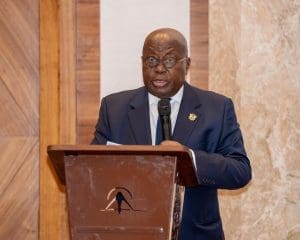
Dr Cassiel Ato Forson, Finance Minister
Finance Minister Dr Cassiel Ato Forson has outlined a four-year, US$10 billion programme branded “The New Economy: New Ghana, Jobs and Prosperity.”
The plan seeks to convert Ghana’s hard-won macroeconomic stabilisation into structural transformation, value addition, and job creation as the country marks 70 years of independence.
Speaking in Parliament while presenting the 2027 Budget Statement and Economic Policy, Dr Ato Forson described the budget as the moment Ghana must decide what to do with its restored “breathing space.”
He argued that repeated cycles of growth followed by instability, fiscal expansion followed by painful correction, and commodity windfalls followed by debt distress must end.
The crisis of 2022 — marked by inflation of 54.1 per cent, a primary deficit of 4.3 per cent of GDP, debt exceeding 100 per cent of GDP, and reserves covering less than three weeks of imports — had imposed severe hardship on households, businesses, and pensioners.
Ato Forson said by the end of 2025, inflation had fallen to 5.4 per cent, the primary balance swung to a 2.5 per cent surplus, public debt declined to 44.7 per cent of GDP, and reserves rose to 5.7 months of import cover.
Stability tested and held in 2026
Forson reported that the recovery withstood multiple shocks in 2026: a near-doubling of oil prices from Middle East conflict, a sharp early drop in cocoa prices, the destruction of Akosombo’s control room that stranded 1,020 MW of capacity, and severe floods.
Inflation, he said, remained in single digits (5.5 per cent in October), real GDP grew 6.2 per cent in the first half (above the 4.8 per cent target), non-oil growth reached 5.9 per cent, and reserves stood at US$12.7 billion (4.5 months of cover) by end-September.
He stated that lending rates and treasury bill yields fell sharply, while credit to the private sector expanded 35.5 per cent.
Fiscal results through October showed a primary surplus of 1.4 per cent of GDP on a commitment basis and an overall deficit better than programmed. Government also announced early redemption of GH¢29 billion in February 2027 Domestic Debt Exchange Programme bonds and accelerated Eurobond payments, emphasising that buffers had been built so Ghana would not default again.
The New Economy: Eight pillars, US$10 billion
The centrepiece is a US$10 billion programme for 2027–2030, financed by reducing the primary surplus target by one percentage point of GDP and expected revenue gains of 0.5 per cent of GDP from reforms already approved. In 2027 alone, 1.5 per cent of GDP (about GH¢30 billion) is earmarked. The eight interconnected pillars are:
- Macroeconomic stability and affordable finance — Maintain a primary surplus of at least 0.5 per cent of GDP, keep debt near 45 per cent of GDP, preserve single-digit inflation, and target roughly 8 per cent real growth and unemployment below 8 per cent by 2030. An annual Investment-Grade Readiness Report will track progress. Development Bank Ghana, Ghana EXIM Bank, and credit guarantees are to channel cheaper, longer-term finance to productive enterprises.
- Commercial agriculture (US$3 billion) — Build eight integrated value chains (rice, sugar, poultry, maize/soya feed, aquaculture, oil palm, vegetables, cocoa processing). Rice hubs are to bring 100,000 additional hectares into production; commercial rice imports are to be prohibited by 2030. Oil-palm expansion targets 100,000 new hectares with a US$500 million patient-finance window. The Pwalugu multipurpose dam (US$1 billion) will irrigate more than 25,000 hectares, host fish cages, and generate 70 MW. Ghana aims to process at least 50 per cent of cocoa locally by 2028 and 100 per cent by 2030. Public procurement will prioritise Ghanaian staples.
- Energy infrastructure (US$2.2 billion) — Construction begins in December 2026 of a fully state-owned 1,450 MW thermal plant at Kafodzidzi-Abrobeano (first 600 MW by end-2028). A 600 MW solar plant with 2,000 MWh of battery storage is also planned. US$500 million will modernise transmission; two million prepaid meters will be deployed; performance-based private participation in distribution is scheduled for completion by end-2027. The goal is to cut generation costs toward 8 US cents/kWh or lower and phase out emergency plants by 2030. A US$200 million nuclear-readiness programme runs through 2028, with training of more than 2,000 scientists; any nuclear plant will remain a strategic national asset.
- Critical minerals value addition (US$1.5 billion) — Process at least 70 per cent of artisanal and small-scale gold locally by end-2027 and 100 per cent by end-2028. Process 50 per cent of manganese and bauxite by end-2028 and all by end-2030, with raw-ore export bans. A 24-hour processing enclave in the Western Region will be powered by the new generation capacity. A railway from Takoradi to Nyinahin (via Nsuta and Awaso) will be built with domestic resources; later extension to Hamile will serve the Sahel.
- Tourism, culture and creative arts (US$1 billion) — Year-round “Black Star Experience,” conservation of slave-trade sites, a new international convention centre at La Trade Fair (SSNIT), five-star hotels in Accra and Kumasi, four-star hotels in key corridors, a National Theatre in Kumasi, and a medical-tourism hub with tax incentives and serviced land.
- Textiles and garments (US$1 billion) — Modernise mills and factories, create industry enclaves with shared infrastructure, and require public procurement of uniforms, hospital textiles and protective wear from Ghanaian manufacturers only. Goal: commercial-scale production supplying regional and global markets by 2030.
- Pharmaceuticals and biomanufacturing (US$1 billion) — Establish hubs in the Eastern and Central Regions. Public procurement of medicines will default to Ghanaian products that meet quality standards. Target: manufacture 60–80 per cent of essential medicine needs locally by 2030, generating about 20,000 jobs.
- Technology economy (US$300 million) — National Artificial Intelligence Centre with shared high-performance computing and training; upgrade of rural 2G networks to reliable 4G. Priority applications in agriculture, health, energy, mining, logistics, Ghanaian languages and public services.
He stressed that the government will provide strategic infrastructure, bankable projects and predictable policy; the private sector is expected to lead investment, innovation and employment.