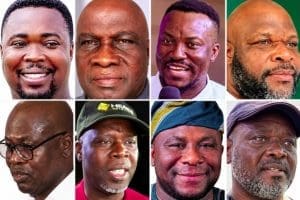
Violence, vote buying stain NDC constituency primaries

NDC
The NDC constituency primaries were rocked by violence, disorder and alleged vote buying, with delegates reportedly receiving cash, televisions, mobile phones and household appliances as ballot-box seizures and gunshots disrupted contests in several constituencies.
From Odododiodioo and Ledzokuku in the Greater Accra Region to Sefwi Akontombra in the Western North Region, video footage and reports showed angry delegates, ballot-box confrontations and security personnel struggling to restore order, raising concerns about the credibility of the governing party’s internal elections.
The reported incidents exposed troubling aspects of political competition, with some aspirants allegedly seeking support through material inducements while disputes over voting and counting procedures degenerated into confrontations.
The scale of the alleged gifts, ranging from electronic gadgets to household appliances and cash, also raised questions about whether delegates were choosing leaders based on merit, competence and vision or the benefits offered to them.
The disturbances threatened to overshadow the exercise, with proceedings disrupted in several constituencies and an election reportedly suspended at Amenfi East despite the alleged distribution of gifts.
Ballot boxes, gunshots and chaos
At Odododiodioo in Greater Accra, disturbances broke out after polls closed, forcing the suspension of ballot sorting and counting. Video footage showed a police officer running from the scene with a ballot box as several people pursued him, with some appearing to attempt to seize it.
The officer managed to leave the area with the box and reportedly took it to a police station for safekeeping.
The dramatic confrontation raised concerns about the security of election materials and the ability of officials to complete the process without intimidation.
Tema East
At Tema East, tension erupted over the procedure for counting ballots after aspirant Kempes Papa Nii Ofosu Ware reportedly proposed that all ballots be brought together for a collective count rather than counted according to individual polling stations. Some aspirants resisted the proposal, triggering confusion at the venue as the constituency elected new leaders.
Sefwi Akontombra
In Sefwi Akontombra in the Western North Region, suspected machomen reportedly seized ballot boxes, turning the election violent.
Police fired warning shots in an attempt to restore order, but the intervention reportedly failed to calm the situation immediately.
Kintampo North
Kintampo North in the Bono East Region also experienced pandemonium, with gunshots reportedly heard as police struggled to contain rising tensions.
Ledzokuku
At Ledzokuku, in the Teshie area of Greater Accra, footage showed police officers scrambling to restrain angry delegates amid chaotic scenes.
The incidents highlighted the risks posed when disputes over electoral procedures and competing interests overwhelm the mechanisms meant to ensure orderly voting and counting.
Televisions, phones and cash
Alongside the violence, allegations of vote buying emerged as another major concern, with reports and footage from several constituencies showing delegates receiving valuable gifts.
Fomena
At Fomena in the Ashanti Region, delegates reportedly alleged that a contestant had shared money and Huawei mobile phones.
Suhum
In Suhum in the Eastern Region, footage reportedly showed delegates receiving blenders, table-top refrigerators and cash.
Amasaman
At Amasaman in Greater Accra, videos showed the distribution of standing fans, cooking stoves and other items.
Amenfi East
In Amenfi East in the Western Region, delegates reportedly received televisions, clothing and cash.
The election was nevertheless suspended.
The variety and value of the alleged inducements raised concerns that material benefits were becoming a significant feature of the contest for internal party positions.
Such practices risk shifting the focus from candidates’ records, competence and plans for their constituencies to their ability to provide gifts.
The allegations, however, require credible investigation, and responsibility must be established through evidence rather than social media footage or claims alone.
Legal and accountability questions
The incidents have renewed debate about the legal framework governing vote buying in Ghana, particularly its application to internal party elections.
Section 33 of the Representation of the People Law, 1992, prohibits vote buying in general elections but does not explicitly address the practice in party primaries, raising questions about whether the legal framework adequately covers such conduct. The apparent gap does not, by itself, establish that every form of inducement in a primary is lawful; the facts and any other applicable legal or party rules would need to be examined.
The immediate question is whether the police, other investigative bodies and the NDC itself will investigate the reported violence, ballot-box seizures and alleged inducements, and whether those found to have breached the law or party rules will face consequences.
Because the allegations involve members of the governing party, the response will be closely watched. Failure to investigate credible claims or apply rules consistently could deepen public cynicism about political accountability and fuel perceptions that party affiliation shields individuals from scrutiny.
The NDC also faces the challenge of resolving electoral disputes transparently and demonstrating that its disciplinary procedures apply regardless of an aspirant’s influence or standing.
Test of internal democracy
The primaries were intended to give delegates an orderly opportunity to choose constituency leaders.
Instead, the reported violence, disputes over ballot counting and allegations of material inducements threatened confidence in the process.
When valuable appliances, electronic gadgets and cash are allegedly offered to secure votes, questions arise about the resources deployed to win internal contests and the expectations that may follow when successful aspirants assume office.
Violence and intimidation pose an even more immediate threat by placing delegates, election officials and security personnel at risk.
The credibility of the exercise will depend not only on how the party responds to the immediate disputes but also on whether it establishes the facts and takes action where wrongdoing is proven.
Suspected criminal conduct should be referred to the appropriate authorities.
The public will be watching to see whether the incidents lead to credible investigations and accountability or fade without a clear determination of responsibility.
The outcome will shape perceptions of the NDC’s internal democracy and the broader commitment of political actors to free, fair and credible elections.