Drug crisis: Catholic Bishops, NPP demand probe

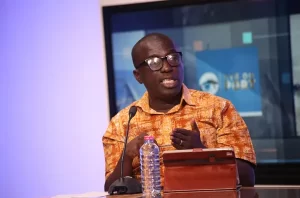
Rev. Matthew Kwasi Gyamfi and Henry Nana Boakye
The Ghana Catholic Bishops’ Conference (GCBC) and the New Patriotic Party (NPP) have called for deeper investigations into a growing number of illicit drug seizures linked to Ghana, raising concerns about the networks behind the trade and the effectiveness of controls at the country’s ports, airports and borders.
The Bishops described the narcotics menace as a serious national concern and moral crisis requiring a coordinated response beyond routine criminal enforcement, while the NPP accused the government of presiding over a worsening drug-trafficking crisis and demanded a parliamentary inquiry, removal of several institutional heads and an investigation into alleged official complicity.
The calls follow a series of major seizures in Ghana and abroad, including 3,319.66 kilogrammes of cocaine intercepted at Pedu Junction in March 2025, 320 kilogrammes of methamphetamine shipped from Ghana to Australia in April 2026 and nearly 3.9 tonnes of cocaine seized in France in September 2026.
The cases have intensified scrutiny of Ghana’s vulnerability to international narcotics networks and the ability of state agencies to detect and disrupt large consignments before they leave the country.
Bishops demand urgent response
In a statement signed by the President of the Ghana Catholic Bishops’ Conference, Most Rev. Matthew Kwasi Gyamfi, on Monday, September 21, the Bishops said the drug problem required an urgent, coordinated and sustained national response.
The Conference said the narcotics menace had become more than a criminal justice issue, describing it as a national concern and moral crisis threatening institutions, families and young people.
It said the recent seizure at Dunkirk in France should prompt investigators to establish how nearly 3.9 tonnes of cocaine concealed in plastic waste moved through legitimate commercial channels from Ghana to France.
French customs authorities intercepted the consignment on September 10. It was estimated to have a street value of €225 million, with part reportedly destined for Antwerp, Belgium.
Four Ghanaians have since been arraigned before the High Court in Accra, while a fifth accused, Dutch national Jos Leijdekkers, is reported to be at large. The Bishops stressed that accused persons remain presumed innocent until proven guilty.
The Conference commended NACOC and other agencies for their efforts and welcomed the formation of an inter-agency task force to tackle narcotics trafficking through Ghana’s ports, airports and borders.
However, it said enforcement must go beyond intercepting consignments and arresting couriers.
‘Follow the money’
The Bishops urged investigators to identify the financiers, organisers, businesses and financial arrangements sustaining the narcotics trade.
They expressed concern that enforcement could focus on couriers and peripheral suspects while the principal actors remained unidentified.
Referring specifically to the Pedu Junction cocaine seizure, the Conference questioned whether investigations had sufficiently established who financed and coordinated the operation.
It called on investigators to “follow the money” and trace the financial and commercial structures supporting narcotics trafficking.
The Bishops also raised concerns about possible involvement of public officials, citing a March 2026 case involving nine public officers arrested over a large consignment of undeclared tramadol at Tema Port. The officers reportedly included personnel from Customs, NACOC and other public institutions.
The Conference said anyone who abused public trust to facilitate the movement of illicit drugs should be held accountable regardless of position.
Scale of the problem
The Bishops said the Dunkirk seizure formed part of a wider pattern of narcotics incidents linked to Ghana since March 2025.
They cited cocaine concealed beneath sand in a tipper truck, suspected cocaine hidden in sacks of gari at Tema Harbour and methamphetamine concealed in a charcoal shipment intercepted by Australian authorities.
The Conference also cited figures contained in a September 18 memorandum signed by more than 40 Members of Parliament, which estimated that high-profile narcotics seizures linked to Ghana over the preceding two years had exceeded US$1 billion in value.
It further cited NACOC figures showing 217 arrests, 165 prosecutions, more than 8.5 tonnes of assorted narcotic drugs and 45.4 million tramadol tablets intercepted during the period under review.
The Bishops said the figures demonstrated the need for stronger coordination among agencies responsible for preventing narcotics trafficking.
They backed calls for Parliament to be recalled to examine the situation and urged the relevant ministries and agencies, including those responsible for the Interior, Transport and National Security, NACOC, the Ghana Ports and Harbours Authority, Ghana Revenue Authority, Ghana Immigration Service and National Intelligence Bureau, to account for the effectiveness of controls at entry points.
The Conference also called for stronger prevention, treatment and rehabilitation programmes, saying people struggling with addiction should receive medical, psychological, social and spiritual support rather than being treated solely as criminals.
NPP steps up pressure
The NPP adopted a more confrontational position, accusing the government of failing to protect Ghana’s borders and international reputation.
Reading the party’s statement, National Organiser Henry Nana Boakye alleged that Ghana had moved beyond the risk of becoming a transit point and had become a major transit hub for narcotics.
The NPP further alleged that its intelligence indicated possible compromise of security controls at ports and airports and claimed that clandestine laboratories were operating in Ghana to process narcotics for export.
Those claims were presented by the NPP as intelligence available to the party and require independent investigation before they can be treated as established facts.
The party said repeated consignments linked to Ghana and intercepted in Australia, France, Belgium, the Netherlands and South Africa demonstrated a pattern requiring accountability.
NPP lists major seizures
The NPP cited 12 major drug seizures and related incidents.
On March 4, 2025, it said the National Intelligence Bureau intercepted a tipper truck at Pedu Junction carrying 3,319.66 kilogrammes of cocaine concealed under sand, with an estimated street value of US$350 million.
It also cited a second March 2025 seizure on the Takoradi-Cape Coast Highway involving about 120 slabs of cocaine, valued by the party at approximately US$150 million.
The party raised questions over reports concerning two aircraft that allegedly arrived at Kotoka International Airport from Gran Canaria, Spain, in March 2025, with allegations involving narcotics and undeclared currency.
On April 23, 2025, NACOC officers intercepted 73 slabs of cocaine weighing 89.74 kilogrammes at the Swissport Cargo Terminal at KIA. The cocaine was allegedly concealed in three wooden boxes declared as traditional artefacts and destined for the Netherlands.
The NPP also cited the July 2025 MV Sankofa vessel case and concerns over its release by the Ghana Maritime Authority after payment of part of a nearly GH¢12 million fine.
In February 2026, it cited the arrest of a senior manager of a manufacturing company at KIA over alleged cocaine concealed in packaged gari intended for export.
In August 2026, 866 parcels of suspected cocaine were seized at Tema Harbour after allegedly being concealed in sacks of gari at a warehouse, with London identified as the intended destination.
International interceptions
The NPP cited an estimated 250 kilogrammes of cocaine intercepted in the Netherlands in 2025 after allegedly being shipped from Ghana in branded Ghanaian food products.
It also cited a December 4, 2025 Belgian case involving approximately 1.158 tonnes of suspected cocaine allegedly destined for Antwerp.
In April 2026, Australian authorities intercepted 320 kilogrammes of methamphetamine at Port Botany in Sydney, concealed in charcoal containers shipped from Ghana. The NPP estimated the street value at US$208 million.
In September 2026, French customs seized nearly 3.9 tonnes of cocaine concealed in plastic waste inside a container originating from Ghana, with an estimated value of about US$261.45 million.
The party also cited the September 2026 arrest in South Africa of a man allegedly carrying heroin after travelling from Accra to Johannesburg.
The NPP said the estimated street value of major narcotics seizures linked to Ghana between 2025 and September 2026 exceeded US$1 billion.
Questions over security controls
The party said the variety of concealment methods—including sand-filled tipper trucks, artefact boxes, gari and branded food products, plastic waste, charcoal, passenger luggage and private aircraft—showed the sophistication of the networks involved.
It questioned what systemic changes had been introduced after each major seizure and demanded answers on road cargo security following the Pedu Junction incident, screening protocols at the Swissport terminal and intelligence-sharing arrangements with Australian authorities.
It also demanded information on the outcomes of investigations and how many cases had resulted in completed prosecutions and custodial sentences.
The NPP questioned the continued tenure of the head of Tema Port, alleging that the officer had reached the end of his service but received a contract extension. It demanded an explanation for the extension and also raised an allegation concerning a possible family relationship between the officer and the Finance Minister.
The allegation was presented by the NPP as a matter requiring explanation and has not been established by the material provided.
Questions over security link
The NPP also raised questions about Musah Atta, whom it linked to the Dunkirk case.
The party alleged that pictorial and video evidence showed that Mr Atta had at various times been associated with presidential and vice-presidential security details.
It questioned how an individual allegedly connected to the security apparatus could become linked to a cocaine shipment of such magnitude and called for an investigation into whether security access had been compromised.
NACOC, however, has said its preliminary background checks did not establish that any of the suspects in its custody in the Dunkirk case was a presidential escort or close-protection officer for President John Dramani Mahama or Vice-President Jane Naana Opoku-Agyemang.
NPP demands inquiry, removals
The NPP called for the immediate recall of Parliament and establishment of a special bipartisan committee to conduct a public inquiry into drug seizures linked to Ghana.
It wants the committee to have powers to summon witnesses and compel the production of shipping documents, inspection records, clearance decisions and other relevant records.
The party also demanded the removal of the heads of the Ghana Ports and Harbours Authority, Ghana Maritime Authority, Ghana Shippers’ Authority, NACOC, National Security, National Intelligence Bureau, Ghana Airports Company Limited, Customs and the Ghana Police Service.
It further demanded a full public account of the financiers and organisers behind the major seizures, rather than focusing only on couriers and peripheral suspects.
The NPP called for a time-bound investigation into alleged official complicity, including any possible links between individuals with access to the Presidency and the narcotics trade, with the findings published.
It also criticised the arrest and remand of Senior Nursing Officer Salomey Awity Baffoe over her alleged connection to the “Ghana Jollof” social media account, describing it as a possible distraction from the drug-trafficking controversy.
That remains a political allegation by the NPP and is not an established finding.
The competing calls from the Bishops and the NPP have increased pressure on the government and security agencies to demonstrate how Ghana is responding to the seizures.
While the Bishops have emphasised coordinated enforcement, prevention, rehabilitation and tracing the financiers behind the trade, the NPP has demanded parliamentary scrutiny, institutional accountability and a public investigation into alleged official complicity.
At the centre of both positions is whether Ghana’s response can move beyond intercepting shipments and arresting couriers to identifying the networks, financiers and institutional weaknesses that allow large consignments of narcotics to move through legitimate commercial channels.