If “Ghana Jollof” is in UK, why is Salomey in Custody?
The two-week remand of Senior Nursing Officer Salomey Awity Baffoe over her alleged association with the anonymous “Ghana Jollof” TikTok account has raised questions about the basis for her detention and the consistency with which freedom of expression is being treated.
Ms Baffoe, 40, a mother of three, was arrested during a midnight raid at her home in Hansua in the Techiman Municipality of the Bono East Region on Sunday, September 13.
She was subsequently brought before the Adenta Circuit Court 1 in Accra and remanded for two weeks in connection with investigations into individuals allegedly linked to the “Ghana Jollof” account.
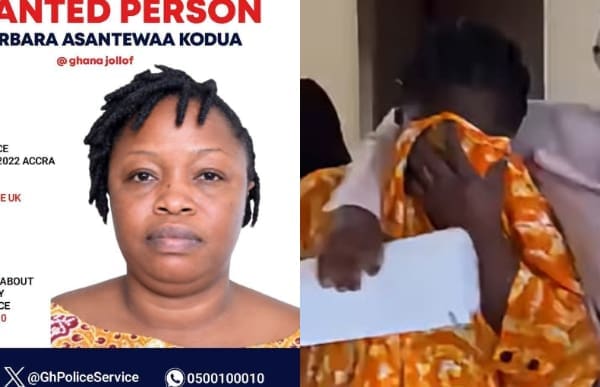
The case has attracted attention because the Ghana Police Service has separately declared Barbara Asantewaa Kodua, 40, wanted in connection with the same account.
In a notice issued on Thursday, September 17, the Police said Ms Kodua was believed to be associated with the “Ghana Jollof” TikTok account and was wanted for allegedly inciting violence.
The Police said she was last seen at the Accra International Airport on August 4, 2022, and was suspected to be hiding in the United Kingdom.
That development has created a central question: if the Police believe the person associated with the “Ghana Jollof” account is Ms Kodua and that she may be in the United Kingdom, why has Ms Baffoe been arrested and remanded for two weeks?
Lawyer questions detention
Ms Baffoe’s lawyer and Member of Parliament for Manhyia South, Nana Agyei Baffour Awuah, raised precisely that concern after the court hearing.
“Because you want to arrest Ghana Jollof, you have remanded her for two weeks. Meanwhile, you told the court that Ghana Jollof is in the UK,” he said.
The argument puts the evidential basis for Ms Baffoe’s detention under scrutiny. The material provided does not state what specific evidence the Police have presented linking her to the account or explain the precise nature of her alleged association with it.
Ms Baffoe had also publicly denied being the person behind “Ghana Jollof” before her arrest.
In a video posted on social media, she urged the public to disregard what she described as false claims about her identity.
“I want to urge the public to ignore the lies being spread about me. I am not Ghana Jollof. I am a mother. I am a trader. I have nothing to do with that account. Please, let me live my life in peace,” she said.
Two days later, she was arrested.

Adding another twist, the “Ghana Jollof” account itself reportedly released a video after Ms Baffoe’s arrest, mocking security operatives and claiming they had arrested the wrong person.
Police wanted notice
The Police notice on Ms Kodua has further complicated the matter.
The Service said she was wanted for allegedly inciting violence but did not specify which particular statements, videos or other content published by the account allegedly amounted to incitement.
The “Ghana Jollof” account has been highly critical of government officials, particularly President John Dramani Mahama and First Lady Lordina Mahama, often using vulgar language.
The question, therefore, is not simply whether offensive speech should be permitted. It is whether the authorities are applying the same standard to political expression regardless of who makes the comments and who is being criticised.
The Animal Farm argument
The case has triggered an “Animal Farm” argument over the treatment of political speech.
The concern is that some social media users associated with the National Democratic Congress (NDC), while the party was in opposition and after it assumed government, allegedly used similarly unprintable language against political opponents, traditional leaders, religious leaders and business executives without facing comparable arrests.
The allegation raises the broader issue of whether the rules governing political expression are being applied equally.
The text provided also alleges that the government has embarked on a wider crackdown on free speech, with more than 20 journalists and political opponents arrested in connection with social media activity.
If critics of government are arrested for speech while supporters making comparable statements escape similar treatment, the result would be a serious perception of double standards.
The test, therefore, is not whether the government has the right to investigate threats or unlawful conduct. It is whether that power is being exercised consistently and fairly.
A test for free speech
The “Ghana Jollof” case has consequently become bigger than the fate of one TikTok account.
At its centre are unresolved questions about why Ms Baffoe was arrested, what evidence allegedly links her to the account and how her case relates to the Police’s identification of Ms Kodua as the person associated with “Ghana Jollof”.
The authorities will also face questions about the broader treatment of political speech, particularly where similar conduct is alleged to have occurred on both sides of the political divide.
Ms Baffoe remains in custody while investigations continue. The Police have declared Ms Kodua wanted and say they believe she may be in the United Kingdom.
For the government, the credibility of the crackdown will ultimately depend on evidence, due process and consistency.
If speech crosses the line into a criminal offence, the evidence must establish that offence. But if the same rules are not applied equally to government supporters and critics, the enforcement of those rules risks becoming another political fault line.
The “Animal Farm” question is therefore unavoidable: are the rules of political expression the same for everybody, or do they change depending on who is speaking and who is being criticised?