
MCE, residents and NADMO clash over Weija flood warnings
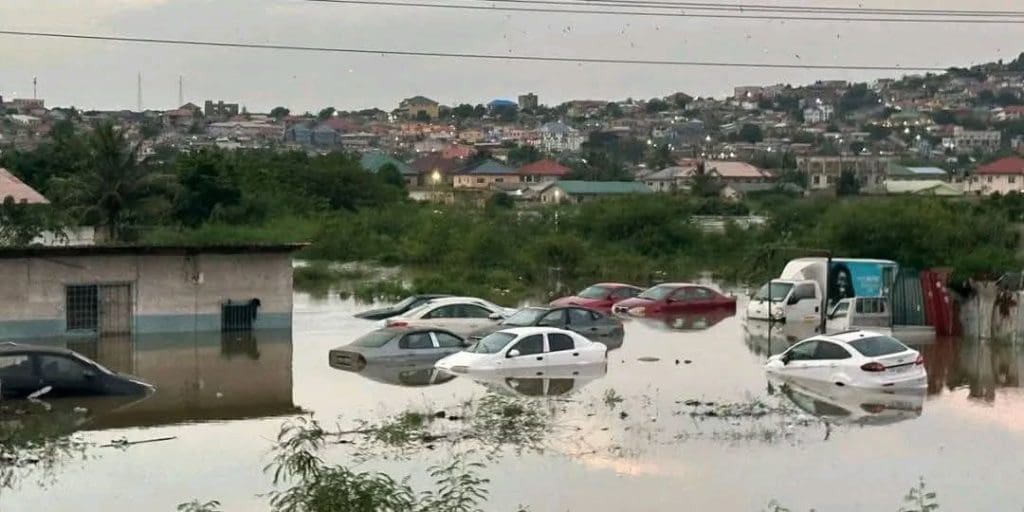
Weija floods
Conflicting claims have emerged between residents of Weija-Gbawe, the Municipal Chief Executive (MCE) for the area, Felix Odartey Lamptey, and the National Disaster Management Organisation (NADMO) over whether adequate prior warning was given before the spillage of the Weija Dam that has submerged hundreds of homes and displaced residents in parts of the Greater Accra Region.
While affected residents and the Weija-Gbawe Municipal Assembly insist that they were not informed ahead of the spillage, NADMO maintains that downstream communities had been warned weeks in advance and evacuation arrangements had already been communicated before the release of excess water from the dam.
The disagreement comes as floodwaters continue to inundate several low-lying communities around Weija following the opening of the spillway by Ghana Water Limited after rising water levels at the dam.
MCE blames lack of notice for scale of flooding
The Municipal Chief Executive for Weija-Gbawe, Felix Odartey Lamptey, has strongly criticised what he described as the absence of timely communication from authorities managing the dam, arguing that the Assembly was denied the opportunity to adequately prepare residents before the flooding situation escalated.
According to him, unlike previous years where there had been collaboration and advance notification, this year’s spillage occurred without proper engagement with the Municipal Assembly.
“We were not given any prior notice, so we could not prepare adequately as a municipal assembly,” he stated.
Mr Lamptey explained that although the spillway was opened on Wednesday evening, authorities did not anticipate the speed and volume with which water would flow into residential communities.
“They opened the spillway and suddenly saw water entering houses. It was not expected to rise to that level so quickly,” he said.
The MCE disclosed that as the flooding situation worsened, he personally attempted to engage officials of Ghana Water Limited to seek clarification and coordinate responses but was unable to meet the manager responsible at the time.
He said he was informed that the officer in charge was unavailable.
The MCE added that the Assembly had since activated emergency response measures to support affected residents and minimise further damage.
According to him, small boats have been deployed to evacuate trapped residents, particularly elderly persons, children and individuals who cannot swim.
Vehicles are also being used to transport displaced residents and their belongings to safer areas, including churches and temporary shelters within the municipality.
Mr Lamptey noted that Assembly Members across the affected electoral areas had been tasked to coordinate evacuations and assist displaced families with immediate relief support.
Hundreds displaced as homes submerged
The flooding has displaced hundreds of residents across parts of Weija and surrounding communities after large volumes of water spread rapidly through low-lying settlements downstream of the dam.
Several homes, shops and properties have been submerged, forcing residents to hurriedly evacuate belongings while others continue to seek refuge in safer locations.
Eyewitnesses described scenes of panic as floodwaters entered homes unexpectedly, with many residents scrambling to salvage household items before water levels rose further.
The latest flooding has renewed longstanding concerns about recurring flood disasters associated with annual spillages from the Weija Dam and the growing vulnerability of communities situated along waterways and flood-prone areas.
NADMO insists communities were warned
However, the Greater Accra Regional Director of the National Disaster Management Organisation (NADMO), Dennis Nartey Adjarnor, has rejected claims that affected communities were not informed ahead of the spillage.
Speaking to journalists on Thursday, May 28, 2026, Mr Adjarnor insisted that NADMO had maintained continuous communication with downstream communities before and during the exercise.
According to him, residents living along the banks of the dam had been adequately informed about the impending spillage as water levels approached the operational threshold.
“The dam’s operational maximum capacity is 47 feet. As at 45 feet, they started spilling. With all these spillages, we were informing the communities along the banks. So all the communities are aware that the dam will be spilling,” he said.
Mr Adjarnor disclosed that NADMO had also identified safe havens and evacuation centres ahead of the exercise to facilitate the relocation of residents if flooding intensified.
“We were able to organise safe havens where we could easily evacuate them. What we are doing now is to ensure that we evacuate and save livelihoods and properties. They were duly informed,” he stressed.
The NADMO Director said emergency teams remained on the ground assisting with evacuations and monitoring developments in affected communities.
Renewed concerns over flood preparedness
The conflicting accounts have sparked renewed debate over Ghana’s disaster preparedness systems and coordination between state institutions responsible for flood management and emergency response.
Residents in affected areas have continued to express frustration over what they describe as recurring annual flooding linked to dam spillages, inadequate drainage systems and weak enforcement against development in waterways.
Urban planning experts and disaster management advocates have repeatedly warned that uncontrolled settlement expansion in flood-prone zones continues to increase the scale of destruction whenever heavy rains coincide with dam spillages.
Authorities have advised residents living close to waterways and flood-prone communities to remain alert and cooperate with evacuation directives as weather experts predict continued rainfall in the coming weeks.
Emergency response operations are expected to continue as officials assess the full extent of damage caused by the flooding and provide relief support to displaced families.