What next for Damang after Gold Fields handover on April 18?
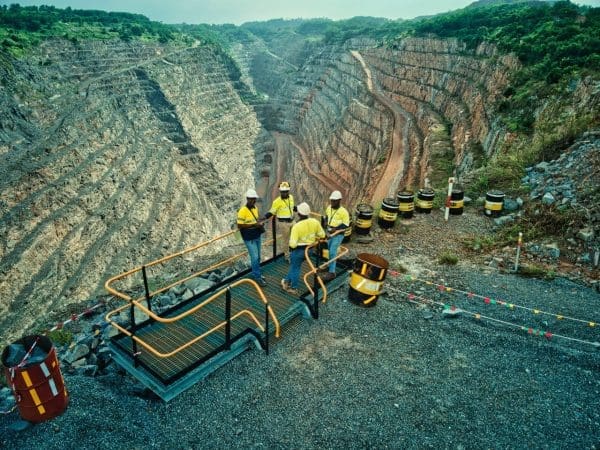
Gold Fields Damang Mines
Gold Fields is set to hand over the Damang Mine on April 18, 2026, marking the end of the one-year transition period.
However, it is not clear how the government will ensure the continuous operation of the mine as no successor investor has yet been announced to take over the asset.
The transition of the Damang Mine, operated by Gold Fields, is expected to be completed on April 18, 2026, following a 12-month lease extension granted after the mine’s original lease expired in April 2025.
The extension was intended to facilitate a safe and orderly transfer to Ghanaian ownership.
However, as the deadline approaches, neither the identity of a new operator nor the structure of the post-transition arrangement has been publicly disclosed.
The uncertainty has cast a shadow over the livelihoods of about 1,500 direct and indirect workers connected to the Damang operation whose economic survival depends on the mine’s continued operation.
Feasibility study points to viable future
During a media briefing in Johannesburg to present the company’s 2025 full-year results, senior executives of Gold Fields confirmed that they have no knowledge of which company will take over the Damang asset.
Alex Dall-Chief Financial Officer (CFO), Jongisa Magagula- Executive Vice-President of External Affairs and Investor Relations, and Kershnee Govender-Vice-President for Communications participated in the session and addressed questions relating to the Ghanaian operations.
They disclosed that as part of the lease extension agreement, Gold Fields completed a comprehensive feasibility study on Damang and submitted it to the Minerals Commission and the Minister of Lands and Natural Resources at the end of 2025.
9 years life span, 140,000 ounces a year
According to the company’s assessment, under its operational assumptions and gold price outlook, the Damang asset could have an additional mine life of approximately nine years.
Annual production over that period was projected to range between 140,000 and 150,000 ounces.
US$500 million capital investment required
The feasibility study further estimated that capital investment of between US$500 million and US$600 million would be required to sustain operations over that extended life.
Management, however, cautioned that the projections reflect Gold Fields’ own technical and economic assumptions.
A new owner or operator could adopt a different mining plan, cost structure, or capital strategy, potentially leading to outcomes that differ materially from the company’s projections.
Nonetheless, the findings suggest that Damang is not a depleted asset, but one that could remain commercially viable under the right investment and operational framework.
Transition to Ghanaian ownership
Gold Fields confirmed unequivocally that it will cease ownership and operatorship of Damang on April 18, 2026, in line with the agreed transition timetable.
The 12-month lease extension granted in 2025 was specifically designed to allow for a structured handover, including the preparation of technical documentation, operational continuity planning and regulatory compliance.
Despite the structured transition process, the absence of a named successor has heightened anxiety among workers and host communities.
With gold prices remaining relatively strong globally, stakeholders are keenly watching how the government will manage the next phase of Damang’s operations to safeguard employment and maximise value for the country.
The Damang development also comes against a broader national conversation about resource ownership, fiscal terms and the extent to which Ghana derives optimal benefit from its mineral wealth.
Tarkwa lease renewal under review
Beyond Damang, attention has also turned to the future of the Tarkwa Mine, another major Ghanaian asset operated by Gold Fields.
The company confirmed that it formally submitted its mining lease renewal application for Tarkwa in November, accompanied by an updated life-of-mine plan and expanded reserve base.
Under the revised plan, Tarkwa’s operational life could potentially be extended to more than 20 years.
Management indicated that the updated reserve statement and mine plan were intended to demonstrate the long-term economic value of the asset and the significant upside opportunity that could be realised through continued partnership with the government.
The lease renewal discussions are, however, unfolding within a changing regulatory and policy environment in Ghana.
Proposed increases in royalty rates, amendments to mining legislation and debates over tenure and ownership participation have all formed part of the national discourse.
Executives described engagement with the government as constructive but acknowledged that the evolving policy framework has contributed to some delays in finalising the renewal process.
They noted that Gold Fields may effectively be among the first major producers to undergo a lease renewal under a revised regime, potentially setting a precedent for future renewals in the sector.
Gold Fields reaffirmed Ghana’s enduring strategic importance within its global portfolio.
2025 results
In 2025, the company’s Ghana operations produced approximately 475,000 ounces of gold, accounting for about one-fifth of total group output.
Since 2000, Gold Fields has invested more than US$5 billion in capital expenditure in Ghana.
It has paid over US$250 million in dividends to the Ghanaian government, which holds a stake in Tarkwa, and channelled more than US$100 million into community investments spanning health, education and local infrastructure.
Production up 18%; zero fatalities recorded
The discussions around Damang and Tarkwa took place against the backdrop of what Gold Fields described as one of its strongest financial performances in recent years.
For the 2025 financial year, the group recorded an 18% year-on-year increase in production, delivering 2.438 million ounces of gold at the upper end of its guidance range.
7,000 employees
The company currently has a workforce of around 7,000 people in Ghana comprising employees and contractors with 98% of the workforce being Ghanaian nationals.
Management emphasised that beyond financial contributions, its presence in Ghana has facilitated the growth of local supplier businesses, skills transfer and broader economic linkages that extend beyond mining itself.
Chief Executive Officer Mike Fraser highlighted that the company achieved a fatality-free year across all operations, although seven serious injuries were recorded, underscoring the need for continued focus on safety.
All-in costs increased by three per cent year on year, while all-in sustaining costs rose by one per cent, largely due to inflationary pressures, higher royalties and strengthening producer currencies.
These pressures were partially offset by higher output and operational efficiencies.
The company also advanced key projects within its portfolio, including the ramp-up of the Salares Norte project in Chile, progress at the Windfall project in Canada and consolidation of the Gruyere asset in Australia.
Capital discipline and shareholder returns
Gold Fields significantly increased shareholder returns in line with a revised dividend policy introduced in late 2025.
A total dividend of 25.50 per share was declared, representing 35% of free cash flow before discretionary investments.
In February, the company announced additional returns of US$353 million, comprising a special dividend of US$253 million and a US$100 million share buyback programme.
Combined, these measures amount to a total yield of 6.3 per cent, positioning the company in the upper quartile among its peers.
Of approximately US$3 billion in pre-cash flow generated in 2025, US$1.4 billion was allocated to base dividends, while US$665 million was invested in growth projects and exploration.
The balance was directed towards strengthening the company’s investment-grade balance sheet and funding additional shareholder returns.
Management stressed that disciplined capital allocation remains central to sustaining investor confidence, particularly during periods of elevated gold prices.
Navigating transition and growth
As Gold Fields prepares to exit Damang and negotiates the future of Tarkwa, it finds itself balancing operational excellence, regulatory navigation and shareholder expectations.
For Ghana, the coming weeks will be critical in determining the future of the Damang Mine, the security of thousands of jobs and the broader signal sent to investors about the management of strategic mineral assets.
For Gold Fields, the message from its leadership was clear: disciplined growth, strengthened partnerships and balanced shareholder returns will guide the company’s path forward — even as it navigates one of the most consequential transitions in its Ghanaian operations in decades.