
Burundi’s Ndayishimiye elected as AU Chairperson
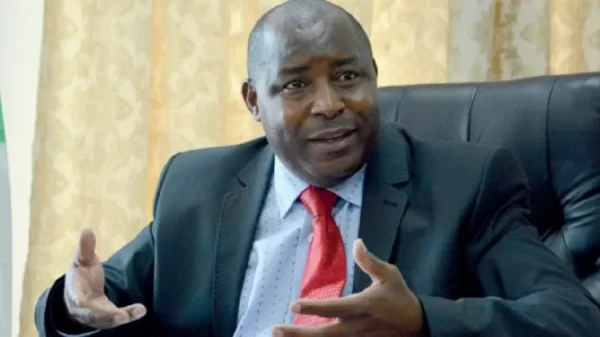
President Évariste Ndayishimiye
President of Burundi Évariste Ndayishimiye has been elected as the new Chairperson of the African Union (AU), taking over the rotating leadership of the continental body at the conclusion of the AU Assembly of Heads of State and Government.
The chairmanship, which is held for one year, places Ndayishimiye at the forefront of coordinating the Union’s political direction, mediating regional conflicts and championing key development initiatives across Africa.
He takes over the rotating leadership from Angola’s João Lourenço at the 39th Ordinary Session of the AU Assembly of Heads of State and Government in Addis Ababa, Ethiopia.
President of the Republic of Ghana, John Dramani Mahama, secured the First Vice position.
The composition of the new Bureau of the Assembly of the Heads of State and Government of the African Union for 2026 is as follows:

1. Chair of the African Union – The Republic of Burundi, (Central)
2. First Vice – Ghana, (West); President John Dramani Mahama
3. Second Vice – Tanzania, (East);
4. Third Vice – To be confirmed, (North Africa Region); and
5. Rapporteur – Angola, (South) .
In his acceptance remarks, Ndayishimiye pledged to prioritise peace, security and economic cooperation among African countries.
He also called for stronger regional integration, trade expansion under the African Continental Free Trade Area (AfCFTA), and collective efforts to address unconstitutional changes of government and armed conflicts affecting parts of the continent.
The AU Chairperson plays a largely political and diplomatic role, representing Africa in global engagements and helping to build consensus among member states on major policy decisions.
The position rotates annually among regions of the continent, reflecting the AU’s principle of equitable representation.
Ndayishimiye succeeds the outgoing chair, who handed over leadership at the end of the summit, marking the beginning of a new policy cycle for the 55-member body.
Addressing the Assembly meeting, AU Commission Chairperson H.E. Mahmoud Ali Youssouf said the summit is anchored on the 2026 theme of water and sanitation, stressing that access to water is a shared public good vital for development and peace.
He observed that the gathering comes amid growing geopolitical uncertainty, characterised by ongoing conflicts, fragile institutions, and a renewed wave of unconstitutional changes of government in some parts of the continent.
In the face of weakening multilateral cooperation and increasing global polarisation, he called on Member States to speed up political and economic integration in line with the goals of Agenda 2063.