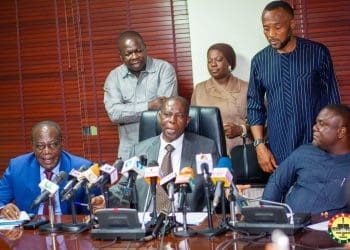
Pressure group OccupyGhana has submitted a draft bill to the Attorney General and Minister of Justice, to systemically overhaul how Ghana polices the selection of political leaders at the party level.
The bill targets four specific acts: the Criminal Offences Act (Act 29), the Representation of the People Act (PNDCL 284), the Office of the Special Prosecutor Act (Act 959), and the Vigilantism and Related Offences Act (Act 999), to eliminate what it describes as “definitional inconsistency” that allows corruption in party primaries to go unpunished.

The primary amendment being sought by the group is the repeal of Section 3(5) of the Criminal Offences Act and the insertion of a new Section – 259.
This new section explicitly states that “public election” now includes any primary, congress, or conference used by a registered political party to elect officers or nominate candidates for the Presidency and Parliament.
This amendment adds a “no-relief” clause, stating that no person can avoid punishment by claiming there was an “irregularity or informality” in the election proceedings.
The bill also proposes an amendment to the Representation of the People Act by introducing a new Section 42, that strips the Attorney-General of the exclusive power to authorize electoral prosecutions via a written fiat.
Rather, OccupyGhana proposes that the power to investigate and prosecute electoral offences shall be exercised “primarily and independently” by the Special Prosecutor.
While it preserves the Attorney-General’s ultimate constitutional authority under Article 88, it gives the Special Prosecutor the autonomy to act without direction or control from any person or authority.
To cement this change, the bill seeks to amend Section 79 of the Office of the Special Prosecutor Act.
This would officially reclassify “electoral offences,” including bribery, intimidation, and personation, as “corruption and corruption-related offences,” bringing them directly under the OSP’s jurisdiction.
In its explanatory memorandum, OccupyGhana addresses potential constitutional hurdles, clarifying that these amendments do not turn party primaries into “constitutional public elections” and do not trigger Article 49 or 50 rights, such as universal suffrage or the issuance of writs by the Electoral Commission.
Instead, the bill relies on Parliament’s power to define criminal conduct wherever it occurs. The group argues that this reform is essential to stop the “normalisation” of bribery within parties, ensuring that those who seek public office do not buy their way onto the ballot.
Furthermore, the proposed bill seeks to replace the definition in section 11 of the Vigilantism and Related Offences Act to ensure consistency.
They note also that the current statutory definition of ‘public election’ in section 3(5) of the Criminal Offences Act, while appropriate at the time of enactment, has led to the unintended effect of excluding party primaries, congresses and similar processes from the reach of offences relating to elections.
This gap, the group argues, has contributed to the normalisation of bribery, inducement and undue influence within internal party elections, undermining democratic accountability and public confidence.
The proposed amendments will recognise party primaries as public in consequence, without treating them as constitutionally public elections, and will thus avoid constitutional conflict by regulating criminal conduct, and not party organisation and will align with Ghana’s existing statutory framework governing political
parties.