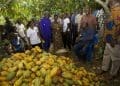

Ghana’s cocoa sector is facing a severe market disruption, with tens of thousands of tonnes of beans stranded at the farm level, COCOBOD CEO Randy Abbey has confirmed.
At a press briefing at Cocoa House in Accra on February 6, 2026, Abbey described a season marked by farmer hardship, lingering debts, and a funding model under immense strain.

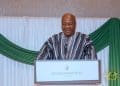
He revealed that while COCOBOD has successfully sold more than 530,000 tonnes of cocoa this season, about 50,000 tonnes remain unsold, citing Ghana’s uncompetitive farmgate price as the primary cause.
“The buyers now find our beans too expensive, and therefore they have shifted to other markets where they can get the beans far cheaper, because these are business decisions.
“We have sold over 530,000 tonnes of the crop. We have another under 50,000 that we are yet to find buyers for, and that is when the buyers started shifting,” Abbey said.
He noted that international cocoa prices are hovering around $6,400 per tonne, while the domestic crop price remains below $4,000. Buyers are increasingly drawn to alternative markets, even though farmers are guaranteed a significant share of $5,040 per tonne.

The CEO assured farmers that the Board recognises their struggles, including delayed and unpaid deliveries, and confirmed that plans are in motion to introduce a new funding model for the 2026/27 season.
He also outlined the broader financial pressures on COCOBOD, revealing a total debt of GH¢32.91 billion, which includes a $481 million loan due in the 2025/26 season with no funds earmarked for repayment.
He disclosed that COCOBOD defaulted on forward sales contracts in the 2023/24 season, failing to deliver 333,760 tonnes of cocoa at $2,600 per tonne—a misstep that cost the country nearly $1 billion in potential revenue.
Additionally, a $350 million loan has been secured for the rehabilitation of 156,400 hectares of cocoa farms, supplemented by a GH¢700 million injection to strengthen the sector.