119 lives lost during Bawku mediation — Mahama reveals

Mahama with Upper East chiefs
President John Dramani Mahama has disclosed that at least 119 people have lost their lives in the protracted Bawku conflict, underscoring the growing human cost of the violence and the urgency of ongoing peace mediation efforts.
According to Mahama, the figure emerged during briefings connected to attempts by traditional authorities, security agencies and government stakeholders to resolve the long-running dispute in the Upper East Region.
He made this known when he addressed the Upper East Regional House of Chiefs, led by its President, Pe Ditundini Adiali Ayagitam III, during a courtesy call on him at the Presidency in Accra, adding that the casualty toll highlights the need for renewed commitment from all sides to embrace dialogue and de-escalation.
The Bawku conflict, which has persisted for years, is rooted in a chieftaincy dispute and has periodically erupted into violent clashes, resulting in deaths, injuries, displacement of residents and disruption of economic activity.
Businesses, schools and public services in the municipality have frequently been affected, while residents continue to live under heightened security measures.
Mahama emphasised that mediation must be treated as a national priority rather than a political matter, noting that the loss of lives, especially among young people and civilians, is a serious concern. He called on community leaders, youth groups and opinion leaders to support peace initiatives and discourage retaliation.
He explained that while traditional mediation led by the Asantehene, Otumfuo Osei Tutu II, was pursued to find a customary resolution, the process ultimately had to revert to the lawful position after the intended reconciliation did not materialise.
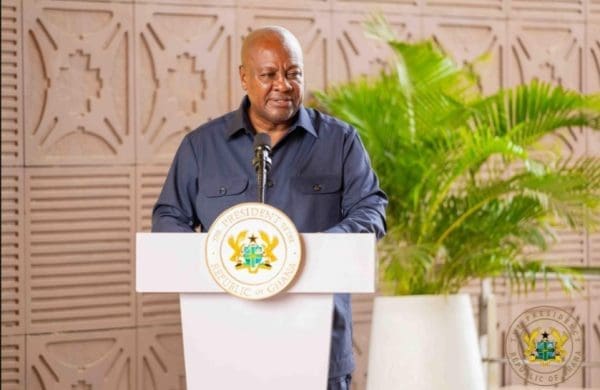
“Unfortunately, I think that didn’t happen. And once it didn’t happen, then the mediator had no option but to revert to what the law says,” Mahama said.
According to him, sustainable peace in Bawku would require not only security deployment but also reconciliation efforts among the factions involved.
Traditional leaders and mediators have been working to facilitate dialogue between the parties in an effort to achieve a lasting settlement.

He declared that the gazetted Chief of Bawku, Naba Asigri Abugrago Azoka II, was the legally recognised authority, stressing that “the law is the law” and that sentiment could not override legal and judicial committee decisions if nationwide chaos was to be prevented.
To consolidate the peace, Mahama announced the establishment of a one billion Ghana Cedi Bawku Restoration Fund, aimed at driving development in the six affected districts through investments in infrastructure, health, education and irrigation projects.

Mahama appealed to residents of the area to cooperate with mediators and avoid actions that could inflame tensions. He stressed that lasting peace would allow normal economic and social life to resume and enable development projects in the municipality to continue.