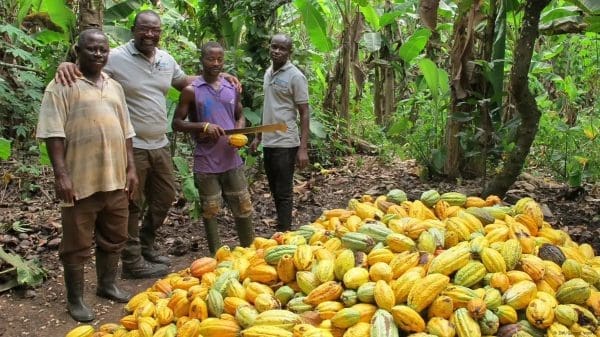
Cocoa farmers across Ghana are threatening a nationwide demonstration next week amid mounting frustration over delayed payments by the Ghana Cocoa Board (COCOBOD) for cocoa beans delivered as far back as November 2025, a delay that has plunged farming families into financial distress and raised alarm about the future of the country’s vital cocoa sector.
Farmers say months of unpaid dues have left them unable to meet basic needs, including paying school fees, seeking medical care, and preparing for the next planting season. In interviews with researchers and media, farmers from several cocoa-producing regions confirmed that despite repeated assurances from COCOBOD, no clear timelines for settlement have been provided, deepening anxiety in rural communities.


Plight of farmers deepens
At the centre of the unrest is Francis Teinor, President of the Mankrong Cocoa Cooperative Farmers Association, who appealed to COCOBOD and government authorities to clear the outstanding payments swiftly to avert “disruptions in the cocoa sector.”
Teinor lamented that many farmers are now struggling to put food on the table and care for their families.
“It’s been about six weeks, no money for cocoa farmers. This is seriously affecting the sector… we will be on the streets next week,” he warned.
Another analysis of the crisis shows that the payment delays stem partly from changes to COCOBOD’s financing model, which replaced traditional syndicated loans with reliance on international traders to pre-finance purchases.
A combination of rising interest rates, falling global prices, and traders’ reluctance to make advance deposits has constrained funding, forcing the government to intervene.
A sector at risk
The situation is particularly perilous given how critical cocoa is to Ghana’s economy. Once the backbone of the nation’s agricultural export earnings — historically accounting for a sizeable share of foreign exchange receipts and employing millions of rural households — cocoa remains one of Ghana’s most important export commodities.
It supports rural livelihoods and contributes significantly to national income through exports of beans and related products.
Delayed payments threaten not just individual livelihoods but the broader production system.
When farmers wait months without payment, they are pushed into debt, desperation, or out of the sector entirely, undermining future output and confidence in Ghana’s cocoa value chain.
Danger of Galamsey and Farm Sales
The crisis comes at a time when cocoa farms are already under threat from illegal mining, locally known as galamsey.
The National President of the Concerned Farmers Association of Ghana, Nana Oboadie Bonsu II, recently sounded the alarm about the destruction of cocoa farms by illegal miners, cautioning that Ghana’s focus on gold over cocoa could have “dire long-term consequences.”
Disturbingly, some farmers facing prolonged payment delays are reportedly considering selling their land to illegal miners or smuggling their cocoa to neighbouring countries in search of faster cash — trends that could accelerate land degradation and reduce Ghana’s productive cocoa acreage. A report from Ashanti Region farmers highlighted how arrears have pushed some to contemplate selling their farms to illegal miners amid mounting financial pressure
Illegal mining not only destroys productive cocoa farms but also pollutes water sources and depletes soil quality, creating longer-term environmental and economic losses that could further depress cocoa yields and rural incomes
Ghana has also faced persistent challenges with cocoa smuggling to neighbouring countries, which undermines both state revenue and farmer returns.
Between the 2021/22 and 2024/25 seasons, Ghana reportedly lost more than US$1.1 billion to smuggling, according to COCOBOD data, as farmers seek better prices or quicker payment alternatives
These trends could be exacerbated if farmers lose faith in formal market mechanisms and begin circumventing them entirely or abandoning cocoa for short-term, often destructive, mining activities.
Govt and COCOBOD responses
COCOBOD has acknowledged the payment delays and attributed the bottleneck to banking sector challenges that have hindered the flow of funds to Licensed Buying Companies (LBCs), which purchase beans from farmers.
The regulator says it is working with banks to expedite payments and has launched communication platforms like the Cocoa Media Hub to improve transparency.
However, many farmers remain unimpressed, pointing out that promises without prompt action do little to alleviate their immediate financial strain.
The broader stakes
The implications of Ghana’s cocoa payment crisis extend beyond rural hardship.
Cocoa remains central to Ghana’s agricultural economy, historically driving export earnings and supporting millions of smallholder farmers.
Continued payment delays risk eroding farmer trust, shrinking production, and undermining Ghana’s status as a leading global cocoa producer
If the situation deteriorates further, the country could face reduced output, loss of export revenue, increased smuggling, and widespread land conversion to mining — all of which would compound the sector’s existing vulnerabilities.
As farmers prepare to take to the streets next week, policymakers are being challenged to act decisively.
For Ghana’s cocoa sector — and the rural communities that depend on it — timely payment is more than an economic issue; it is a matter of survival.