A new research report on electricity pricing in Ghana has called for a fundamental redesign of the country’s lifeline electricity tariff, proposing a more targeted hybrid support system that could improve its reach and effectiveness for the poorest households.
The study, “The Lifeline Electricity Tariff Classification Policy in Ghana: A Hit or Miss!”, was presented on Thursday at a stakeholder engagement in Accra by lead researcher Professor Philip Kofi Adom. It was carried out in the Greater Accra and Central regions with support from the International Growth Centre, a global economic policy research organisation.

In its current form, the lifeline tariff offers subsidised electricity to low-consumption residential customers — defined in Ghana as households using between 0 and 30 kilowatt-hours (kWh) per month — at a significantly lower unit price than standard residential rates. This band is intended to cushion the poorest users from high power costs.
Under recent Public Utilities Regulatory Commission (PURC) tariff schedules, the lifeline band is charged at a fraction of what higher consumption households pay.
For example, lifeline customers pay around 80 Ghana pesewas per kWh for the first 30 units, compared with more than double that rate for typical residential consumption above that level.
However, Prof. Adom’s report found that only a small proportion of households actually benefit from this subsidised band, with beneficiaries unevenly spread across districts and heavily concentrated in known low-income communities.
The research warns that the tariff design excludes many poor but higher-consuming households while benefiting some wealthier households with artificially low consumption figures.
To address these faults, the report recommends:
Fixing targeting linkages to ensure that lifeline support reaches truly low-income users, including through better metering and data systems.
Introducing micro-consumption bands, such as a 0–30 kWh band followed by a 30–35 kWh band, to smooth the sharp jump in bills that users face once they exceed the current lifeline threshold.
This, the report says, would reduce bill “cliffs” that can push low-income households into energy deprivation.
Providing automatic, time-limited rebates for households that narrowly miss the lifeline cut-off several months in a row, protecting near-poor households who consistently just exceed the threshold.
Strictly enforcing the one-household-one-meter policy to avoid households sharing meters — a common practice that can inflate household consumption above the lifeline band and exclude genuine beneficiaries.
Launching district-specific public education campaigns to improve understanding of tariff rules and how households can benefit from them.
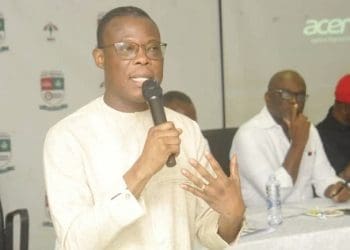
The policy dialogue was organised by the Ghana Institute of Management and Public Administration (GIMPA) in collaboration with the Public Utilities Regulatory Commission’s Centre of Excellence in Public Utility Regulation.
Speaking at the event, Dr Ishmael Arkaah, Technical Advisor at the Ministry of Energy and Green Transition, reaffirmed the government’s commitment to ensuring electricity remains both reliable and affordable.
He said that well-designed tariffs are critical to reduce illegal connections and drive broader economic development.
Professor Samuel Kwaku Bonsu, Rector of GIMPA, described electricity as “the engine of development,” emphasising that both households and industry depend on a predictable and affordable energy supply.
He urged policymakers to design systems that reduce the proportion of income that citizens spend on utilities.
Participants at the engagement urged broader stakeholder consultation to refine eligibility criteria for the lifeline tariff, noting that its current application often allows wealthier households to benefit while excluding many low-income families who need the support most.