PUFA applauds Mahama’s varsity chartering policy

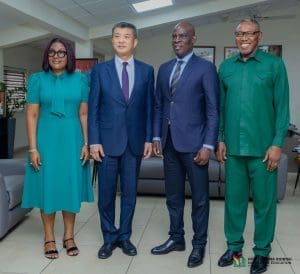
President Dr Paul Kofi Fynn with John Mahama
The Private Universities Founders Association (PUFA)-Ghana has welcomed the government’s renewed engagement with the private tertiary education sector, describing a high-level meeting with President John Dramani Mahama and Vice-President Prof. Jane Naana Opoku-Agyeman as a major boost to the growth and sustainability of private universities in the country.
The engagement, held at the Jubilee House, marked the first time the Association had been granted an audience with both the President and Vice-President simultaneously, a development PUFA-Ghana says signals a growing recognition of the sector’s strategic importance to Ghana’s education system.
In a statement signed by its President, Dr Paul Kofi Fynn, the Association said the meeting provided an opportunity to raise urgent concerns confronting private tertiary institutions, particularly the government’s evolving policy direction on the chartering of private universities.
According to PUFA-Ghana, President Mahama offered the Association a platform to openly discuss challenges within the sector, with special emphasis on the shift from mandatory, time-bound chartering requirements to an optional chartering regime for private universities.
The Association described this policy adjustment as critical to the long-term sustainability of private tertiary institutions, many of which have struggled under previous regulatory frameworks.
“This engagement marked a significant milestone for the Association and private universities,” the statement said, noting that the presence of the Vice-President underscored the administration’s commitment to addressing structural issues affecting private higher education.
PUFA-Ghana interpreted the high-level attention as a clear indication that the government now views private universities as a vital pillar of Ghana’s educational landscape, complementing public institutions in expanding access to tertiary education, building human capital, and supporting national development goals.
The Association expressed particular encouragement at what it described as the government’s openness to dialogue and its proactive approach to policy reform.
It said the move to make chartering optional, rather than compulsory within rigid timelines, would ease regulatory pressures on private universities and allow them to focus resources on improving academic quality, infrastructure, research, and student support.
For years, operators of private universities have argued that mandatory chartering requirements, often tied to strict deadlines, placed significant financial and administrative burdens on institutions at different stages of development.
PUFA-Ghana has consistently maintained that while quality assurance is essential, flexibility in regulation is equally important to sustain innovation and diversity within the sector.
The Association noted that the President’s willingness to listen to these concerns reflects a broader commitment by the Mahama administration to inclusive policymaking and stakeholder engagement, particularly in sectors that play a direct role in skills development and youth employment.

PUFA-Ghana reaffirmed its readiness to collaborate closely with the government and relevant regulatory bodies to strengthen tertiary education delivery in Ghana.
It stressed that public-private cooperation remains key to ensuring that Ghana’s higher education system remains competitive on the global stage while responding to local development needs.
“The Association remains dedicated to partnering with the government to ensure that tertiary education in Ghana remains competitive, inclusive, and aligned with global standards,” the statement said.
Private universities currently account for a significant share of tertiary enrolment in Ghana, absorbing thousands of students who might otherwise be shut out of public institutions due to capacity constraints.
Stakeholders have long argued that the sector’s sustainability is therefore directly linked to national efforts to expand access to higher education and equip young people with relevant skills for a changing economy.
PUFA-Ghana said it is hopeful that the Jubilee House engagement will translate into sustained dialogue and concrete policy actions that support the long-term growth of private tertiary institutions, while safeguarding academic standards and public confidence in higher education.
The Association pledged to continue engaging constructively with the government as reforms in the education sector unfold, positioning private universities as reliable partners in Ghana’s quest for quality, accessible, and future-ready tertiary education.