
Mobile money transactions reach historic GH¢518 billion
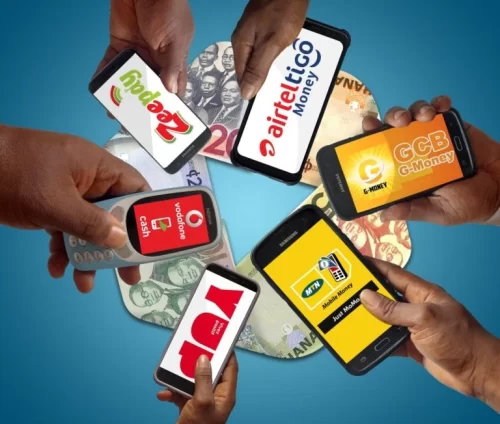
Mobile money transactions
Ghana’s mobile money sector has reached a major milestone, recording a historic GH¢518 billion in transaction value in December 2025, underscoring the country’s rapid shift toward digital payments and a cash-lite economy.
The record figure reflects the growing reliance on mobile money platforms for everyday financial activities, including transfers, bill payments, merchant transactions, savings, and government-related payments. What began as a simple person-to-person transfer service has now evolved into a central pillar of Ghana’s financial system.
The Bank of Ghana’s latest Summary of Economic and Financial Data shows that December recorded the highest monthly mobile money transaction value ever, reinforcing digital wallets as the heartbeat of Ghana’s retail economy.
The surge was largely driven by heightened consumer activity during the Christmas and New Year celebrations. Transaction volumes jumped to 982 million in December, up from 892 million in November, as households and businesses leaned heavily on mobile money for festive spending.
However, the numbers suggest more than just seasonal momentum. The mobile money ecosystem continues to expand at a fundamental level. Active accounts rose to 26.7 million, from 25.5 million in November, while total registered accounts crossed 80.5 million. At the same time, mobile wallet balances climbed to a 2025 high of GH¢39.6 billion, reflecting growing trust in digital platforms not just for payments, but also for value storage.
The contrast with traditional payment methods is stark. Mobile money transactions soared past GH¢518 billion, dwarfing cheque transactions, which stood at just GH¢37.3 billion. Even faster electronic alternatives like GhIPSS Instant Pay, at GH¢73.3 billion, struggled to keep pace with the scale of mobile money.
Analysts attributed this sustained growth to increasing smartphone adoption, a vast network of 491,000 active agents, and improved interoperability across networks. Interoperable transfers alone climbed to GH¢5.8 billion in December, signalling stronger cross-network usage.
As Ghana pushes toward a cash-lite future, mobile money is firmly entrenched as the backbone of everyday commerce—supporting everything from small, informal transactions to large-scale business payments.
The growth highlights mobile money’s contribution to financial inclusion, particularly for unbanked and underbanked populations. Millions of Ghanaians who previously had limited access to formal banking services can now send, receive, and store money securely using their mobile phones.
Businesses have also embraced mobile money, with small and medium-sized enterprises increasingly using it for payments, payroll, and customer transactions. This has improved efficiency, reduced the risks associated with handling cash, and expanded market reach.
As Ghana continues its push toward a digital economy, the GH¢518bn milestone stands as a clear indicator of mobile money’s transformative impact.