BoG urges media to avoid panic-driven reportage

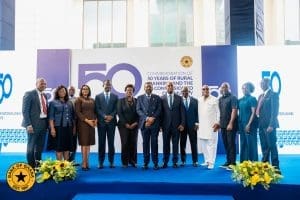
Dr Johnson Asiama with Second Deputy Governor Mrs Matilda Asante Asiedu and the media
The Bank of Ghana (BoG) has outlined a renewed and more deliberate partnership with the media, positioning journalists not merely as observers of economic policy but as critical partners in shaping public understanding, expectations, and confidence at a time when the economy is emerging from a difficult period of adjustment.
At his maiden New Year Media Engagement as Governor, Dr. Johnson Pandit Asiama struck a tone of openness, gratitude, and caution—acknowledging the indispensable role played by the media in 2025 while urging greater responsibility, context, and balance in economic reporting as the country consolidates hard-won stability in 2026 and beyond.
A difficult year and the media’s steady presence
Reflecting on the year just ended, Dr Asiama did not shy away from the pressures and pain of 2025.
“The year 2025 was not an easy one,” he told journalists. “It required difficult judgments, careful sequencing of policy actions, and sustained discipline across institutions.”
It was a year of adjustment not only for policymakers and markets, but for households and businesses navigating rising costs, uncertainty, and policy tightening.
Throughout this period, the Governor said, the media played an essential role in helping Ghanaians understand what was happening, why difficult choices were being made, and what those choices were intended to achieve.
“For that role, I thank you,” he said, describing the media’s contribution as central to maintaining national dialogue during a sensitive economic phase.
Setting the tone for a new chapter
The annual New Year Media Engagement, according to the Governor, has become a vital tradition for the Bank of Ghana.
It offers a platform to reflect on policy outcomes, explain decisions, and situate the central bank’s work within the broader national conversation.
For Dr. Asiama, the engagement carried special significance.
“As this is my first New Year Media Engagement as Governor, I value the opportunity to speak with you directly and to set the tone for how we will continue to engage going forward,” he said.
That tone, he made clear, is one of partnership—grounded in mutual respect, professionalism, and a shared responsibility to the public.
Deepening collaboration beyond the press conference
Looking ahead to 2026, BoG signalled a more structured and inclusive approach to media engagement.
The Governor announced plans to expand the Bank’s media training programmes and introduce a dedicated forum not only for reporters but also for editors, producers, presenters, and behind-the-scenes professionals whose work shapes news content across the country.
This broader engagement, he said, recognises that economic narratives are shaped long before they reach the microphone or the front page.
Through its Communications Department, the Bank pledged to engage more proactively, ensuring media professionals feel welcomed, supported, and confident when called upon to explain complex economic developments to the public.
Rewarding excellence in economic storytelling
As part of efforts to promote accuracy and innovation in economic reporting, the Governor announced the establishment of the Governor’s Economic and Financial Story of the Year Award.
The initiative is designed to recognise factual, insightful, and responsible reporting on economic matters and Bank of Ghana-related stories throughout 2026, across both print and digital platforms.
In a move aimed at incentivising excellence, the winning journalist will receive sponsorship to attend the IMF/World Bank Meetings—one of the world’s most influential global economic forums.
“I encourage all of you to take up this challenge,” the Governor said, adding that the initiative is meant to inspire creativity while reinforcing professional standards.
Why the media matters to central banking
Beyond goodwill and collaboration, the Bank was clear about why the media matters so deeply to central banking.
“A free, independent, and responsible media is a cornerstone of democratic governance,” Dr. Asiama said.
In the context of monetary and financial policy, he noted, the media’s role is particularly critical because policy decisions are complex, their effects indirect, and their benefits rarely immediate.
How these decisions are explained, contextualised, and reported can influence expectations, confidence, and behaviour across the economy—sometimes with profound consequences.
Scrutiny welcomed, recklessness warned against
The Governor was explicit that scrutiny is not only acceptable but necessary.
“Constructive questioning strengthens institutions and improves public understanding,” he said.
However, he cautioned that economic information carries weight. In periods of adjustment, incomplete or poorly contextualised reporting can unintentionally heighten uncertainty, trigger fear, and undermine confidence—affecting households, businesses, and markets alike.
The Bank’s expectation, he stressed, is not compliance but responsibility: accuracy, balance, and context.
In return, the BoG pledged openness, engagement, and respect for the media’s constitutional role—a balance the Governor described as essential to financial stability and public trust.
When reporting becomes a market signal
Dr Zakari Mumuni, First Deputy Governor of BoG, reinforced this message by highlighting the evolving role of communication in modern central banking.
“There was a time when central banks spoke sparingly, if at all,” he said. “That world no longer exists. In today’s economy, communication is policy.”
Words shape expectations, expectations shape behaviour, and behaviour moves markets. In this environment, the media is not merely an observer but a transmitter of confidence and a shaper of sentiment.
Nowhere, he said, is this more evident than in the foreign exchange market.
FX reporting and the risk of fear-driven behaviour
Ghana operates a managed floating exchange rate regime, where daily currency movements—small appreciations or depreciations—are normal.
Yet when such movements are reported without context, they can trigger panic.
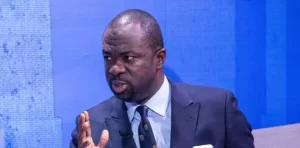
“People rush to protect value. Demand surges unnecessarily. Volatility increases,” Dr. Mumuni explained.
In such moments, reporting itself becomes a market signal—not because fundamentals have changed, but because sentiment has.
Conversely, when reporting is measured and contextual, calm is reinforced, rational behaviour prevails, and markets function more efficiently.
“Every headline matters. Every story sends a signal,” he warned.
Freedom with responsibility
The Bank’s leadership was careful to emphasise its respect for media freedom.
“The question is not whether the media should report on the Bank of Ghana. You must,” Dr. Mumuni said. “The question is how.”
Does the story illuminate or inflame? Build understanding or amplify fear? Strengthen confidence or unintentionally weaken it?
Across the world, he noted, economies have been stabilised—or destabilised—by how economic information is communicated.
A shared burden of trust
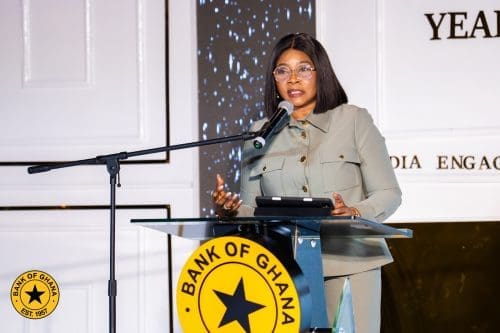
Second Deputy Governor Mrs Matilda Asante Asiedu framed the relationship even more starkly.
“A good policy poorly communicated is a failed policy,” she said.
That belief, she explained, is why the Bank continues to invest in engagement, training, and transparent information-sharing with the media.
The New Year Media Engagement, she said, is designed to deepen trust, strengthen professional bonds, and reaffirm the partnership between journalism and central banking.
Drawing from her own experience in and with the media, she underscored the power of a well-told economic story—not only to inform, but to influence outcomes and shape credibility.
Partners, not adversaries
Mrs. Asiedu was clear that the Bank’s openness is not an attempt to interfere with editorial independence.
“Our doors remain open—not to interfere—but to support accuracy, provide clarity where needed, and ensure economic narratives are grounded in proper context,” she said.
When clarity prevails, confidence follows. And when confidence is sustained, markets and households benefit.
She noted that both central bankers and journalists wield powerful tools—models and policy instruments on one hand, microphones and headlines on the other. Used responsibly, both can calm or unsettle, build or erode trust.
Towards a more informed national conversation
As Ghana enters 2026, the Bank of Ghana’s message to the media is clear: the recovery remains fragile, expectations matter, and communication is inseparable from policy.
The central bank is seeking a relationship built not on control or caution alone, but on trust, professionalism, and shared national responsibility.
“Here’s to deeper collaboration, enduring friendship, and a more informed national conversation,” Mrs Asiedu said.
For the Bank of Ghana, the renewed media partnership is not a side issue—it is a core pillar of economic governance in an age where words move markets and trust underpins stability.