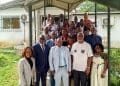

The Pasteur Institute of Côte d’Ivoire (IPCI) launched a workshop on Thursday dedicated to the links between climate change and health, within the framework of the international CHINNOVA project.
This gathering of researchers, institutional leaders, and international partners aims to structure a national research network to anticipate and mitigate the health impacts of climate change.
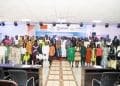
The discussion panels will revolve around the following themes: Panel 1: Leveraging meteorological and climate data for health in Côte d’Ivoire: Current situation, challenges, and perspectives. Panel 2: Diseases and pathogens linked to climate change in Côte d’Ivoire and Africa.
Panel 3: Integrating climate change into the governance policies of health programs in Côte d’Ivoire. Panel 4: Climate change and health: Towards an interdisciplinary research agenda.
At the opening ceremony, the Director General of the IPCI, Professor Méité Syndou, emphasized the seriousness of climate change and its direct repercussions on the health of the Ivorian population.
“Climate change is a global issue that affects all regions. Its effects on health are playing an increasingly important role in scientific studies,” he stated.
According to his analysis, drawing in particular on that of the World Health Organization (WHO), the health consequences vary according to local contexts, depending on the adaptability of health systems and the population’s access to medical services.
However, he emphasized that in Côte d’Ivoire, there is still a gap in terms of a structured, multidisciplinary framework to anticipate these effects.
The CHINNOVA project, funded by the International Development Research Centre (IDRC) and the UK Foreign, Commonwealth & Development Office, aims to fill this gap.
It seeks to strengthen data production, scientific collaboration, and the capacities of health actors in West and Central Africa.
For his part, the Deputy Director General of Health in Ivory Coast, Dr. Koné A. Blaise, stressed the seriousness of climate impacts on human health.
“Rising temperatures, floods, storms and heat waves have major consequences for health,” he said, mentioning the resurgence of diseases such as malaria, dengue fever and cholera, particularly in riverside areas, recalling the cholera outbreak of 2020.
The representative of Minister Professor Adama Diawara, Professor Bamba Aboudramane, Director of Research at the Ministry of Higher Education and Scientific Research (MESRS), emphasized the strategic role of research in addressing these challenges.
“Scientific research must inform public policy on climate change and health,” he stated, calling for the creation of a national group dedicated to this topic.
The opening conference of the workshop was led by Dr. Lucien Manga, WHO Representative in Côte d’Ivoire, on the theme: “Climate Change and Health: Issues, Challenges, and Prospects for Research in Africa.”
He emphasized that “the climate threat constitutes the greatest health threat of the 21st century.”
He commended the efforts of the country and its partners, while reiterating that research must produce concrete results that can be directly used by the affected communities.
The work, which continues until January 16, is expected to result in the creation of a national research network, a needs assessment report, and an action plan to strengthen the resilience of the Ivorian health system in the face of climate change challenges.
The objective is clear: to make Côte d’Ivoire a country better prepared to address these major health challenges.