BoG records GH¢4.893bn loss from Gold-for-Reserves initiative
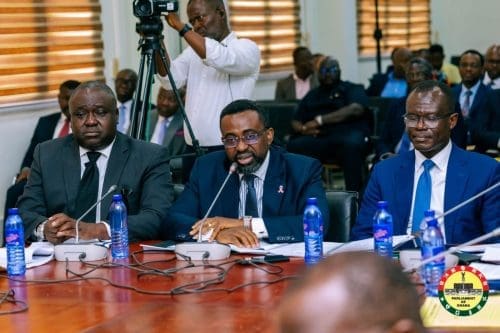
BoG boss Dr Johnson Asiama at PAC
The Bank of Ghana’s Gold-for-Reserves (G4R) programme has recorded cumulative losses of GH¢4.893 billion over a two-year period, raising fresh concerns in Parliament over the cost structure and sustainability of the initiative, even as the Central Bank insists the programme remains vital to Ghana’s reserve accumulation strategy.
The losses comprise GH¢1.054 billion incurred in 2023 and a significantly higher GH¢3.893 billion recorded in 2024. Figures for 2025 are still under audit and are yet to be finalised.
The Governor of the Bank of Ghana, Dr. Johnson Pandit Asiama, disclosed the figures when he appeared before Parliament’s Public Accounts Committee (PAC) in Accra, describing the losses as substantial but not fatal to the programme’s core objectives.
Gold holdings rise despite financial losses
According to Dr. Asiama, Ghana’s total gold holdings under the G4R programme had reached 110.99 tonnes by 2025, with an estimated value of US$11.399 billion. He noted that this growth in reserves underscored the strategic importance of the programme, which was introduced in 2021 to strengthen Ghana’s foreign exchange buffers and diversify the country’s reserve assets.
He stressed that the losses should be viewed within the broader context of reserve accumulation and macroeconomic stabilisation rather than as an outright failure of policy.
Not a blame game
Dr. Asiama urged lawmakers and the public to resist the temptation to frame the losses as grounds for blame, calling instead for a unified national effort to reform the programme.
“The losses should not be a source of blame but rather a rallying point for collective action. Our appeal is for a unified national approach. We want everyone to join in reforming the programme to sharpen efficiency and support economic stabilisation,” he told the Committee.

He explained that while the G4R programme was meeting its fundamental objective of building reserves, its current design required the Central Bank to absorb several costs that were not explicitly captured in its budget.
Quasi-fiscal costs straining central bank
The Governor revealed that the Bank of Ghana had been carrying certain quasi-fiscal costs associated with the programme, a situation he described as unsustainable in the long term.
“The scheme was introduced to solve national problems. The question now is how to reform it and make it more efficient,” Dr. Asiama said, adding that the Central Bank could no longer continue to absorb all associated expenses.
He argued that these costs should properly be captured in the national budget to reduce the financial burden on the Central Bank and improve transparency.
Reforms underway to cut losses
Dr. Asiama said the Bank of Ghana had already begun implementing reforms aimed at reducing operational costs under the G4R programme.
Some charges, he noted, had been lowered, with additional efficiency-enhancing measures currently under consideration.
Reaffirming the relevance of the initiative, he stated: “The Gold-for-Reserves programme is still relevant. Its objective is to build reserves. Evidence shows that it is not a matter of shutting it down but rather enhancing efficiency and removing inefficiencies.”
He added that properly budgeting the programme’s costs as quasi-fiscal activities would significantly reduce losses and make the model more sustainable.
Stakeholder engagements planned
As part of efforts to reform the programme, Dr. Asiama announced that the Bank of Ghana had scheduled meetings with the Ghana Gold Board later in the week, alongside broader stakeholder engagements.
“Beyond that, we are going to be meeting with other stakeholders, and we’ll be happy for experts in Parliament to join us. We believe that it can be made a win-win,” he said.
He expressed appreciation to Parliament for its support for reforms aimed at strengthening the Central Bank and called on relevant ministries and stakeholders to collaborate closely in restructuring the G4R programme.
PAC raises budgetary concerns
The Chairperson of the Public Accounts Committee, Madam Abena Osei Asare, raised concerns over budgetary delays affecting the programme.
She revealed that although US$217 million was allocated in the 2025 Budget for Gold Board operations, no disbursements were made between January and September 2025.
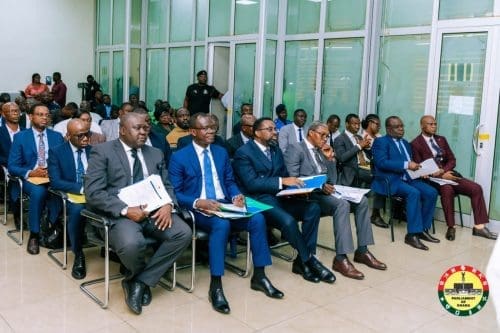
“Actual cash was only provided in December, forcing the Bank of Ghana to sustain trading in the interim,” she said.
Madam Osei Asare stressed the need for timely releases of funds to prevent undue financial strain on the Central Bank and backed calls for reforms to improve efficiency and coordination under the Gold-for-Reserves programme.
Balancing strategic value and fiscal discipline
The PAC hearing underscored the tension between the strategic importance of the Gold-for-Reserves programme and the fiscal pressures it has placed on the Central Bank.
While lawmakers expressed concern about the scale of losses, BoG maintained that with the right reforms, clearer budgetary support and stronger stakeholder coordination, the programme could continue to play a critical role in stabilising Ghana’s economy and strengthening its external reserves.