
The Attorney-General has mounted a strong constitutional defence at the Supreme Court, arguing that the determination of a prima facie case in petitions seeking the removal of a Chief Justice is a policy decision that should not be subjected to the judicial review powers of the courts.
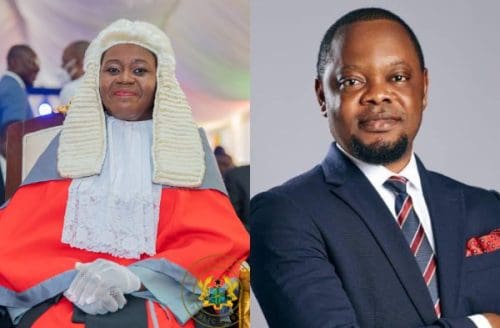
In a Statement of Case filed at the registry of the Supreme Court on November 26, 2025, the Deputy Attorney-General, Dr. Justice Srem-Sai, urged the apex court to dismiss a writ filed by Mr. Theodore Kofi Atta-Quartey, which challenges the constitutionality of the prima facie determination made by President John Dramani Mahama in consultation with the Council of State regarding petitions for the removal of the Chief Justice, Her Ladyship Justice Gertrude Araba Esaaba Torkornoo.


The Plaintiff is seeking a declaration that the President and the Council of State acted unconstitutionally by failing to provide a reasoned opinion to justify their conclusion that a prima facie case had been established against the Chief Justice.
However, the Attorney-General insists that such a demand misunderstands both the nature of the process and the constitutional roles of the institutions involved.
Policy decision beyond judicial review
In his concise but forceful submissions, Dr. Srem-Sai argued that the determination of whether a prima facie case exists under Article 146 of the 1992 Constitution is not a judicial act but a policy decision.
As such, he contended, it ought not to attract the supervisory or review jurisdiction of the courts in the same manner as judicial or quasi-judicial decisions.
Relying on English authorities, particularly the case of A v Secretary of State for the Home Department [2024] UKHL 58 at paragraph 29, the Deputy Attorney-General submitted that bodies such as the Council of State are policy institutions that exercise predominantly political judgment on essential public matters.
He argued that because the Council of State is composed largely of elected and appointed representatives charged with advising the President on matters of governance, its decisions are inherently political and policy-driven, rather than legal determinations susceptible to judicial review.
According to the Attorney-General, extending judicial review to such policy decisions would amount to an unconstitutional intrusion by the courts into the domain of the Executive and advisory bodies established by the Constitution.
No obligation to issue judicial-style reasons
At paragraph 19 of the Statement of Case, the Attorney-General further argued that neither the President nor the Council of State is required to issue a reasoned decision akin to a judicial ruling when making a prima facie determination.
He stressed that both institutions are not courts and do not exercise judicial power when acting under Article 146.
“The President and the Council of State are policy bodies,” the Attorney-General maintained, adding that their role at the preliminary stage of a removal process is limited to assessing whether the petitions disclose a case worthy of further inquiry, not to adjudicate guilt or innocence.
Dr. Srem-Sai also relied on previous decisions of the Supreme Court, including an opinion delivered by Amadu JSC, to argue that the failure to supply reasons does not, in itself, nullify a proceeding, judgment, or decision.
In any event, the Attorney-General insisted that the prima facie determination in the present case was accompanied by reasons, which were duly made available to the Chief Justice.
Absence of C.I. does not invalidate process
Addressing another key plank of the Plaintiff’s case, the Attorney-General rejected the argument that the absence of a Constitutional Instrument (C.I.) to regulate the exercise of discretion under Article 146 renders the President’s actions unconstitutional.
In the 26-paragraph Statement of Case, the Attorney-General argued that although Article 296(c) of the Constitution envisages the codification of discretionary powers, the failure to enact a specific C.I. does not disable or nullify the President’s authority to act under Article 146.
He relied on established Supreme Court authorities, including The Republic v High Court, Accra (Industrial & Labour Division); Ex Parte Peter Sangber-Dery [TLP-SC-2017-39] and Ransford France (No. 2) v Electoral Commission & Another [TLP-SC-2012-54], to support the position that discretionary powers conferred by the Constitution remain exercisable even in the absence of subsidiary legislation.
According to Dr. Srem-Sai, the Supreme Court in the Ransford France case firmly rejected arguments similar to those now being advanced by Mr. Atta-Quartey. He urged the court to reaffirm and apply the reasoning of Date-Bah JSC, who cautioned against using the absence of a C.I. as a basis to paralyse constitutional governance.
Supreme Court to hear arguments
With the exchange of processes now complete, the Supreme Court is expected to hear oral arguments from both parties before fixing a date for judgment.
The case is being closely watched, given its profound implications for the balance of power among the Executive, advisory constitutional bodies, and the Judiciary, as well as the interpretation of Article 146 governing the removal of superior court justices.
The court’s eventual decision is expected to provide authoritative guidance on the scope of judicial review over constitutional processes that blend law, policy, and political judgment at the highest levels of the state.