
How Ankos unites culture, faith and community in Takoradi
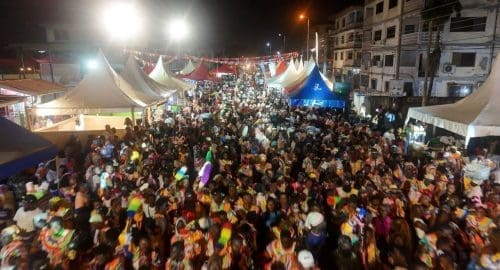
The Central Business District of Takoradi has once again surrendered itself to rhythm, colour and communal joy as masquerades flooded the principal streets to mark this year’s Christmas through the famed Masquerade Carnival, popularly known as the Ankos Festival.
For three significant dates on the festive calendar—December 25, December 26 and January 1—the twin city of Sekondi-Takoradi transforms into a living theatre, where history, culture, music and social bonding converge in what has become one of the biggest carnivals in Africa and a globally recognised street festival.
The Ankos Festival is more than a Christmas pastime; it is the cultural heartbeat of Takoradi.
Each year, it firmly establishes the city as Ghana’s preferred destination for festive celebrations, drawing indigenes home, attracting holidaymakers from across the country and welcoming tourists eager to witness a uniquely Ghanaian spectacle.
As the masquerades take over the streets, Takoradi sheds its everyday commercial identity and re-emerges as a cultural capital where tradition dances freely with modern celebration.
This year’s carnival delivered yet another explosion of joy, cheers and excitement.
From early morning into the late hours, revellers dressed in eye-catching, colourful and spectacular costumes marched through the streets, proudly showcasing rich cultural crafts that reflect both indigenous creativity and evolving artistic expression.
The visual splendour was matched by sound—brass bands blaring trumpets, drums rolling endlessly, and voices lifted in local songs that echoed through the city’s streets and alleyways.
More than 30 masquerade groups, made up of children, youth and adults, paraded through Takoradi in distinct styles and identities.
Each group, clad in unique apparel and masks, announced its presence with elaborate choreography, fancy footwork and animated storytelling through dance.
Accompanied by brass bands and live music, the masquerades stopped at various locations to perform, drawing spontaneous crowds and turning ordinary street corners into vibrant performance stages.
For many onlookers who travelled from far and near, the carnival was a breathtaking experience.
The artistry, discipline and sheer energy displayed by the masquerades thrilled spectators, some of whom watched in awe while others joined the dancing, blurring the line between performer and audience.
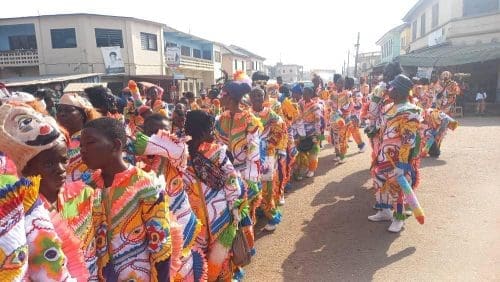
The Ankos Festival thrives on this openness—anyone can be swept into the moment, regardless of age, background or nationality.
Isaac Dadzie, a member of the USA Masquerade Club, summed up the emotional pull of the festival.
Though he works in Accra, Christmas in Takoradi is non-negotiable for him.
Every year, he makes the journey home to join family and friends on the streets.
For him, the Ankos Festival represents one of the rare moments when people slow down from life’s pressures to share laughter, music and togetherness.
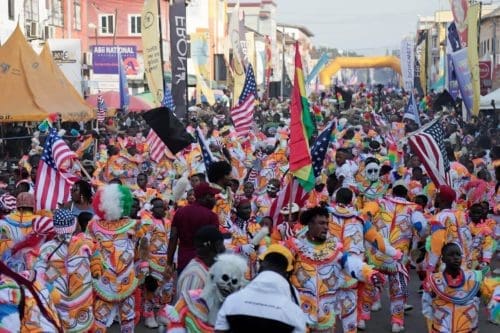
Beyond the celebration, he believes the season should inspire peace and harmony, values he sees reflected in the spirit of the carnival itself.
For others, the festival carries benefits beyond fun and tradition. Janet Awushie, also of the USA Masquerade Club, views the long procession through the streets as a form of exercise and wellness.
Singing, dancing and walking for long distances, she notes, keep participants active and healthy, especially for older members who see the carnival as both cultural expression and physical activity. In this way, the Ankos Festival quietly weaves well-being into celebration.
Known internationally as the Westside Carnival, and locally as the Fancy Dress or Ankos Carnival, the event has grown into a massive annual street festival.
Typically held on December 25 and 26 as the highlight of Christmas in Takoradi, it draws an estimated crowd of over 250,000 people.
The scale of attendance alone places it among Africa’s major carnivals, rivalled by only a few in colour, participation and cultural depth.
Families, individuals and groups pour into the city, eager to witness the glitz and glamour of both long-established masquerade groups and emerging ones redefining the art.
The roots of the carnival run deep. This multi-day extravaganza evolved from post-colonial street festivals blended with traditional masquerade customs of Western Ghana.
Over the decades, it has absorbed influences while remaining grounded in local identity.
Today, old and young masquerade groups parade through Takoradi’s streets in colourful costumes and masks, accompanied by highlife rhythms and contemporary sounds.
Competitions add an element of excitement, while visitors indulge in street food—grilled tilapia, local drinks and spontaneous “wakye parties”—creating an atmosphere where celebration is shared freely and openly.
One of the festival’s most powerful legacies is its role in fostering unity.
The Ankos Carnival attracts diverse ethnic groups including Wassa, Ahanta, Nzema and Sefwi, alongside visitors from other parts of Ghana and abroad.
In the midst of music and masquerade, social differences dissolve, replaced by shared laughter and collective movement. Peace and harmony are not just preached; they are performed, danced and lived on the streets during the festivities.
As the carnival unfolds, Takoradi becomes a non-stop fiesta of joy and unforgettable memories.
Participants repeatedly emphasise the importance of family reunions and social bonds, noting that Christmas in Takoradi is incomplete without the masquerade procession.
Groups such as Yankee, Cosmos and USA Masquerade Clubs highlight the carnival’s unique ability to bring people together across race, age and belief.
The presence and support of institutions such as the Ghana Tourism Authority and the Sekondi-Takoradi Metropolitan Assembly have further elevated the festival, positioning it as a key tourism attraction that boosts hospitality, commerce and cultural exchange in the Western Region.
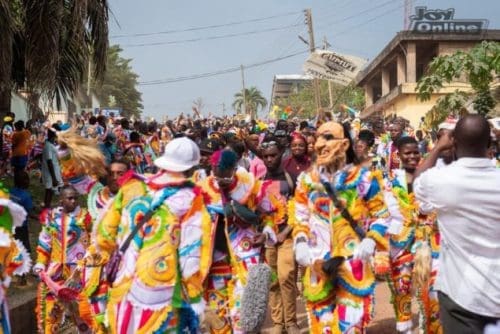
The showmanship on display is nothing short of theatrical excellence. Masquerades wear elaborate, story-telling costumes that represent cultural, historical and sometimes spiritual themes. Their energetic dances, supported by drums and brass bands, thrill crowds with acrobatic feats, samba-inspired processions and competitive performances judged on creativity, coordination and vigour.
For a few hours, the streets cease to be roads and become a dynamic cultural stage where every movement tells a story.
There is also a subtle religious harmony embedded in the celebration.
The city blends Christian traditions—church services, carols and Christmas reflections—with indigenous masquerade expressions. Rather than conflict, the festival demonstrates coexistence.
Open to all faiths, the Ankos Carnival transcends religion, emphasising inclusivity and shared humanity at a time when unity is most needed.
Revellers themselves are the soul of the carnival. High energy defines the streets as people dance freely, join bands spontaneously and welcome strangers with open arms.
Locals embrace foreigners, cameras flash endlessly for photos and videos, and street partying continues without pause.
The sense of belonging is immediate, making first-time visitors feel like long-time participants.
Yet, as the festival continues to grow, calls for improvement are becoming louder.
Many believe it is time for planners and organisers to consider a dedicated venue rather than blocking major roads and disrupting other users.
Locations such as Gyandu, Essipon Stadium, Jubilee Park or the Sports Club have been suggested as potential sites that could host the carnival more efficiently.
Such a move would ease traffic congestion, enhance security and improve the overall experience for revellers.
There are also suggestions for structured ticketing, better signage and stronger eco-friendly practices to sustain the festival’s growth while preserving its cultural integrity.
With thoughtful planning, the Ankos Festival can evolve without losing its soul, securing its place in history as a cultural treasure of Ghana and a global carnival landmark.
As the echoes of drums fade and the masquerades retreat until another Christmas, one truth remains undeniable: the best is always from the west.
In Takoradi, culture does not merely survive—it dances, sings and triumphs on the streets.