BoG incurs $214m loss from small-scale gold trade
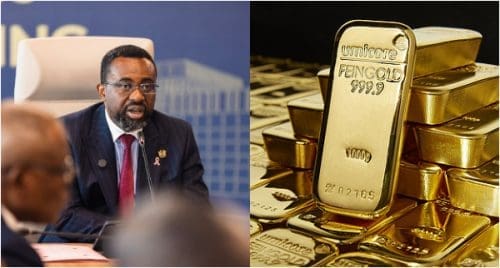
The International Monetary Fund has raised fresh red flags over Ghana’s gold-backed reserve accumulation strategy, disclosing that the Bank of Ghana (BoG) has incurred substantial financial losses running into hundreds of millions of dollars from its involvement in small-scale gold trading under the Gold-for-Reserves framework.
While the programme has helped the central bank rebuild its external buffers faster than initially projected under the IMF-supported programme, the Fund warns that the scale, structure and execution of the gold purchases now pose material risks to the Bank of Ghana’s balance sheet, monetary credibility and, ultimately, the wider economy.
According to the IMF’s latest assessment, losses linked to gold transactions under the Domestic Gold Purchase Programme have deepened significantly since the scheme was expanded.
In 2025 alone, through the end of the third quarter, losses from the artisanal and small-scale mining doré gold component of the Gold-for-Reserves initiative reached US$214 million, equivalent to about 0.2 per cent of Ghana’s gross domestic product.
The Fund attributes the bulk of these losses to adverse trading outcomes, compounded by fees paid to GoldBod off-takers, the new state-backed structure created to intermediate domestic gold purchases.
These losses come on top of earlier setbacks recorded under a now-discontinued component of the programme.
In 2024, the Gold-for-Oil (G4O) arm of the Domestic Gold Purchase Programme generated losses amounting to US$128 million, or 0.15% of GDP.
Notably, about 30 per cent of that loss stemmed solely from the sale of US$800 million worth of gold, underscoring the price, timing and execution risks inherent in the central bank’s direct participation in commodity trading.
The IMF’s findings highlight a central dilemma confronting Ghana’s policymakers.
On one hand, the aggressive scaling up of the Domestic Gold Purchase Programme has enabled BoG to rapidly accumulate gross international reserves and meet quantitative targets under the IMF programme well ahead of schedule.

On the other hand, the manner in which these reserves have been built—through direct exposure to volatile gold markets and intermediated domestic supply chains—has introduced new financial vulnerabilities that could undermine macroeconomic stability if left unaddressed.
Under the IMF-supported programme, Ghana was required to rebuild depleted reserves after years of balance of payments pressures, fiscal dominance and foreign exchange shortages.
The IMF acknowledges that the scaling up of the DGPP has been instrumental in achieving this objective.
By 2025, the Bank of Ghana had already reached the reserve coverage target originally set for 2028, an achievement that would ordinarily be viewed as a major policy success.
However, the Fund cautions that headline reserve figures mask important underlying dynamics.
Of the approximately US$2.6 billion increase in gross international reserves recorded in 2025 through September, more than US$500 million resulted from valuation effects on gold holdings rather than actual foreign exchange inflows.
In addition, over US$800 million of the increase is attributable to the fulfilment in foreign exchange of cash reserve requirements on foreign currency deposits held by commercial banks.
These components, while boosting reported reserves, do not necessarily reflect sustainable or liquid buffers that can be readily deployed to smooth external shocks.
The IMF’s analysis also draws attention to the growing concentration of gold within Ghana’s reserve portfolio.
The Bank of Ghana’s share of gold holdings remains above one-third of its gross reserves, a level the Fund views as elevated for a country with Ghana’s exposure to commodity price volatility. While gold can serve as a hedge and a store of value, excessive reliance on a single asset class increases vulnerability to price swings, particularly when acquisitions are made at scale and under compressed timelines.
At the centre of the IMF’s concern is the expanding Gold-for-Reserves programme, especially following the establishment of GoldBod.
The Fund describes the large and increasing scale of the programme as a source of significant downside risks.
By stepping beyond its traditional role as a monetary authority into that of an active commodity trader and market intermediary, the Bank of Ghana has taken on risks that are atypical for a central bank operating under a stabilisation programme.
Since the approval of the IMF programme, the Bank of Ghana has also assumed an increasingly active role in the foreign exchange market.
The Fund notes that this shift has been supported by stronger balance of payments inflows, with the Domestic Gold Purchase Programme emerging as a key source of these inflows.
Through gold purchases and subsequent transactions, the central bank has been able to inject foreign exchange into the system, helping to stabilise the cedi and ease import pressures.
While this intervention has delivered short-term gains in exchange rate stability, the IMF warns that the underlying mechanics raise important policy questions.
The intermediation role played by the Bank of Ghana blurs the line between monetary policy operations and quasi-fiscal activities, potentially complicating liquidity management and transparency.
Losses incurred through gold trading ultimately weaken the central bank’s balance sheet, which had already been strained by past financing of government deficits and the costs of domestic debt restructuring.
For BoG, the financial implications are significant. Losses of US$214 million in less than a year from small-scale gold trading erode capital buffers and could necessitate future recapitalisation, either directly or indirectly, by the state.
Such an outcome would place additional pressure on public finances at a time when Ghana is still navigating fiscal consolidation under IMF oversight.

The credibility implications are equally important. Central bank independence and policy effectiveness depend not only on statutory mandates but also on balance sheet strength.
Persistent losses from non-core activities risk undermining confidence in the Bank of Ghana’s ability to focus on its primary objectives of price stability and financial system soundness.
This is particularly critical in an environment where inflation expectations remain sensitive and investor confidence is still recovering from the recent debt crisis.
From a broader economic perspective, the IMF’s concerns point to potential spillovers.
If gold prices move sharply against the Bank of Ghana’s positions, or if operational inefficiencies within the Gold-for-Reserves framework persist, losses could widen further.
This would weaken reserve adequacy in real terms and could limit the central bank’s capacity to respond to external shocks, such as sudden capital outflows or terms-of-trade deterioration.
There are also implications for Ghana’s artisanal and small-scale mining sector, which forms a key supply base for the programme. While the DGPP has provided a structured channel for purchasing domestically produced gold, the pricing, quality and settlement arrangements have proven challenging.
Trading losses suggest that the central bank may be buying gold at prices or conditions that do not adequately compensate for market and operational risks, raising questions about value for money and governance within the system.
The IMF’s report implicitly calls for a reassessment of the scope and design of the Gold-for-Reserves initiative. While acknowledging its contribution to reserve accumulation, the Fund signals the need to better align the programme with central banking best practices.
This could involve scaling back direct trading exposure, improving risk management frameworks, enhancing transparency around pricing and costs, and clarifying the respective roles of the Bank of Ghana and GoldBod.
For the economy as a whole, the stakes are high. Ghana’s recent macroeconomic stabilisation has been underpinned by a fragile balance between fiscal restraint, monetary discipline and external support.
Any policy slippage that reintroduces hidden liabilities or weakens institutional credibility could quickly unravel hard-won gains.
The gold trading losses highlighted by the IMF serve as a reminder that unconventional policy tools, while sometimes necessary in crisis conditions, carry long-term costs if not carefully managed.