GJA condemns ‘don’t publish, report to police’ court order
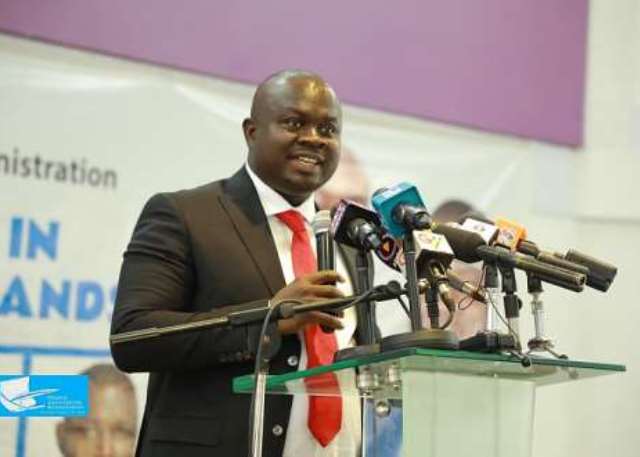
Albert Kwabena Dwumfour
The Ghana Journalists Association (GJA) has strongly condemned a recent High Court ruling, which it says poses a serious threat to free speech, media independence and the fight against corruption in Ghana, warning that the decision could fundamentally undermine investigative journalism and the public’s right to know.
Speaking at the 3rd GJA Dinner Night, the President of the Association, Mr. Albert Kwabena Dwumfour, described the ruling by Justice Nana Brew of the High Court (Human Rights Division 2) as a dangerous departure from constitutional principles that govern press freedom in the country.
The ruling suggests that when journalists obtain information deemed to be of public interest, they should refrain from publishing it and instead submit the information to state institutions such as the Economic and Organised Crime Office (EOCO), the Police or other security agencies for investigation, on the grounds that publication may amount to an invasion of privacy.
Mr. Dwumfour said the GJA “firmly rejects” the position, stressing that it strikes at the very heart of journalism’s democratic function.
He warned that compelling journalists to report their findings to law enforcement agencies rather than publishing them amounts to indirect censorship and erodes editorial independence.
According to the GJA President, journalism cannot be reduced to an appendage of security agencies without grave consequences for democracy.
He emphasised that the media’s constitutional mandate is to inform the public, expose wrongdoing and hold those in power accountable, not to serve as an investigative arm of the state.
He cited Article 162 of the 1992 Constitution, which guarantees the freedom and independence of the media, explicitly prohibits censorship, and protects editors and publishers from government interference.
Mr. Dwumfour argued that any interpretation of the law that requires journalists to submit stories to security agencies before publication directly contradicts these constitutional protections.
The GJA fears that if the ruling is allowed to stand, it will have a chilling effect on investigative journalism.
Journalists, editors and media houses may begin to self-censor out of fear of legal repercussions, thereby weakening the media’s watchdog role.
In such an environment, corruption, abuse of power and other forms of wrongdoing could flourish unchecked, as critical information would be withheld from the public domain.
Mr. Dwumfour warned that the implications go beyond the media fraternity, noting that a silenced or intimidated press ultimately harms ordinary citizens.
“Denying the media the ability to publish public-interest information denies the public its right to know,” he said, adding that transparency and accountability are essential pillars in the fight against corruption.
While reiterating the Association’s respect for the judiciary and the rule of law, the GJA President made it clear that respect does not mean silence in the face of decisions that threaten constitutional freedoms.
He announced that the Association would employ all lawful and constitutional means to oppose the ruling, including seeking legal review, engaging in advocacy and holding discussions with relevant stakeholders.
In a message of solidarity to journalists and media organisations across the country, Mr. Dwumfour assured them of the GJA’s unwavering support.
He said the Association would continue to defend journalists’ rights, provide professional and legal backing where necessary, and ensure that no journalist stands alone for undertaking responsible, public-interest journalism.
The GJA’s strong reaction underscores growing concerns within media and civil society circles that the ruling, if not challenged, could set a precedent that weakens press freedom, undermines media independence and blunts one of Ghana’s most important tools in combating corruption and safeguarding democratic accountability.