
FAB shares gain on first day of GSE listing
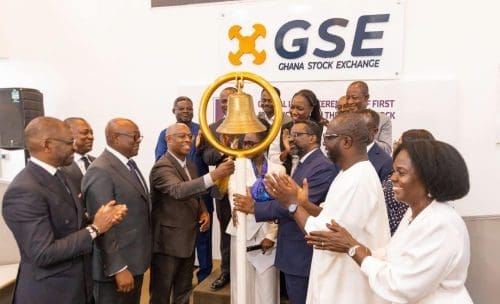
Shares of First Atlantic Bank PLC (FAB) closed higher on their first day of trading on the Ghana Stock Exchange (GSE) on Friday, December 19, ending the session at GH₵7.70 after gaining 0.40 pesewas.
The positive debut followed a successful Initial Public Offering (IPO) that was oversubscribed, signalling renewed investor appetite and growing confidence in Ghana’s banking sector and capital market.
Bank raises GH₵778.6m from market
The indigenous lender raised GH₵778.6 million from the market, exceeding its initial target of GH₵774.2 million by about six per cent.
The offer comprised a combination of shares sold by existing shareholders and fresh capital injected into the bank, strengthening its balance sheet and expanding its ownership base.
CEO highlights demand for quality assets
Managing Director (MD) and Chief Executive Officer (CEO) of FAB, Mr Odun Odunfa, said the strong demand reflected a clear appetite for well-governed financial institutions and demonstrated that “there is money in Ghana looking for quality assets.”
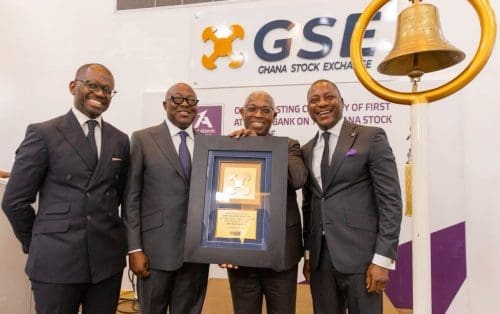
A landmark listing for FAB and GSE
Beyond the modest price appreciation on its first day, the listing represents a defining moment both for FAB and for the GSE.
The bank has become the first lender to list on the bourse in more than seven years, ending a prolonged drought in new equity listings and offering a rare signal that domestic companies are once again prepared to use the capital market to raise long-term funding.
3 decades of growth culminate in IPO
Founded in 1994 and licensed as a universal bank in 2011, FAB’s decision to go public comes at a pivotal moment in Ghana’s financial sector.
After three decades of private ownership, during which it navigated regulatory reforms, tighter capital requirements, the banking sector clean-up, and periods of macroeconomic volatility, the move to open its ownership to the investing public is widely seen as a mark of institutional maturity and strategic confidence.
Strategic reasons behind the listing
Speaking to journalists in Accra, Mr Odunfa explained that the decision to list went beyond regulatory compliance or immediate capital needs, highlighting the importance of broadening the investor base, deepening governance, and supporting capital requirements.
Symbolic significance for Ghana’s banking sector
For analysts, the listing of a 30-year-old indigenous bank carries strong symbolic weight.
In recent years, Ghana’s banking sector has been shaped by consolidation, increased foreign ownership, and regulatory intervention, making FAB’s voluntary public listing a strong vote of confidence in governance and the regulatory framework.
IPO supports long-term growth plans
Mr Odunfa said the IPO and listing would provide a platform to support the bank’s long-term growth ambitions, including investments in digital transformation, regional expansion, and human capital development.
The timing of the listing is notable given challenges in Ghana’s capital market, including low liquidity, limited new listings, and declining retail participation.
The oversubscription of FAB’s IPO suggests investor confidence is gradually returning.
Mr Odunfa attributed the strong response to improving macroeconomic indicators and a more predictable policy environment, citing trends in the cedi, easing inflation, and proactive actions by regulators and government agencies.
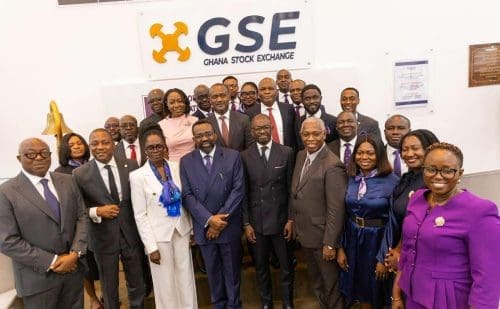
Years of restructuring culminate in IPO
For FAB, the IPO represents the culmination of years of restructuring and balance sheet strengthening, including adapting to higher capital requirements and the merger with Energy Bank in 2018.
Asked about balancing shareholder expectations with long-term growth, Mr Odunfa emphasised prudence, responsible risk management, and a focus on delivering sustainable value without cutting corners.
Listing boosts brand visibility and credibility
Beyond capital and governance, the listing has enhanced the bank’s profile both locally and internationally, giving it more exposure and credibility in the market.
Despite opening its shareholding to the public, FAB remains firmly rooted in Ghanaian ownership and values.
The decision to list domestically rather than offshore was described as deliberate and patriotic.
With the listing, FAB becomes the 12th banking stock on the GSE, aligning with calls by the Bank of Ghana for more financial institutions to go public to deepen liquidity and mobilise long-term capital.
Strong financial performance underpins listing
For the third quarter of 2025, FAB reported profit before tax of GH¢371.3 million, up from GH¢207.9 million the previous year. Total assets rose to GH¢15.66 billion, while customer deposits grew to GH¢13.83 billion.

Managing Director of the GSE, Ms Abena Amoah, described the listing as a turning point for the market, noting that it ended a seven-year IPO drought and signals returning investor confidence.
Central bank endorses market-driven growth
Governor of BoG, Dr Johnson Asiama, highlighted the listing’s role in strengthening Ghana’s financial system by broadening ownership and deepening the link between banking and capital markets.
FAB plans to leverage its listing to drive growth in three areas: digital banking, regional expansion (starting with Liberia and Sierra Leone), and investment in human capital, ethics, and professional standards.
A milestone for Ghana’s capital market
For the GSE and Ghana’s broader financial system, FAB’s listing signals renewed confidence, improved governance standards, and the return of the capital market as a central tool for long-term economic growth.