As Ghana grapples with widespread river pollution caused by illegal mining, popularly known as galamsey, the University of Mines and Technology (UMaT) says it has developed a cutting-edge technology capable of restoring clarity and ecological balance to the nation’s waterways.
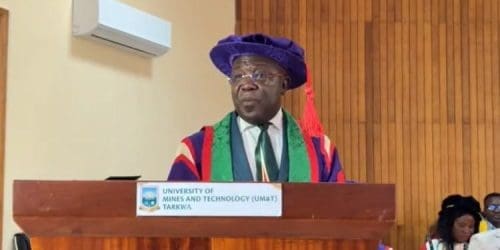
Prof. Richard Kwasi Amankwah, Vice Chancellor of UMaT, revealed the breakthrough at the university’s 17th Congregation Ceremony in Tarkwa, where 2,496 students graduated across various programs. According to Prof. Amankwah, the university has not only developed the scientific expertise but also the operational readiness to deploy the technology nationwide, pending government approval.


“At UMaT, we have the technology and know-how to clear all the polluted rivers in Ghana if given the opportunity,” he stated, emphasising the university’s readiness to spearhead a national clean-up effort.
The process combines satellite-enabled water quality assessments led by Geomatic Engineers with rigorous sampling and purification modelling conducted by the Minerals Engineering Department.
Satellite imagery allows engineers to monitor river water quality across small-scale mining communities.
Simultaneously, minerals engineers collect and analyse samples to design targeted purification strategies capable of addressing the high turbidity levels caused by illegal mining.
UMaT’s Minerals Engineering Department has already tested the system in several small-scale mining areas, demonstrating its effectiveness in rehabilitating heavily polluted rivers.
The university says it is prepared to scale the technology nationwide to tackle Ghana’s escalating environmental crisis.
“The combination of geospatial monitoring and advanced purification modelling makes this technology a game-changer in the fight against galamsey-related environmental degradation,” Prof. Amankwah added.
With this innovation, UMaT is positioning itself as a key partner for government and communities seeking sustainable solutions to the country’s polluted waterways, offering both the technical know-how and the operational capacity to restore Ghana’s rivers.