You’re senseless for opposing National Cathedral — Apostle Kumah to Christians

Apostle Lilian Kumah
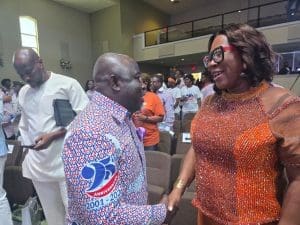
Apostle Lilian Kumah, a prominent Ghanaian preacher and widow of the late Deputy Finance Minister and Ejisu MP, Dr. John Kumah, has sparked public debate with a controversial statement in defense of the National Cathedral project.
Speaking during a church program in a video on social media, Apostle Kumah criticised detractors of the cathedral, especially those within the Christian community.
According to her, it is unreasonable for any Christian to oppose or speak against the construction of a national edifice dedicated to God.
“If you are a Christian and you talk against the National Cathedral, you don’t have sense, I am telling you,” she declared in Twi.
“Do you know the number of mosques they built? Within this short time, they didn’t make noise about it (Cathedral),” she added.
She further questioned the attitudes of Christian critics, comparing their reaction to the quiet progress of Muslim communities in constructing places of worship.
“And Christians, we blame from the top to down, including the pastors who were handling the project… Go to Kumasi alone and see where the dense population is not even Muslim. Bigger than the so-called cathedral that gave us manhole.”

“Go and see the number of mosques. And nobody is talking about that. How can you talk like that? We have built our houses and our homes. And they are simple. It could have even economically empowered the nation. Shame on us. Even if the person is faking, how can you talk like that? Raising an altar for God.”
“And then Christians, deacons, and deaconesses in their churches will sit on television and say, Why are we building churches?’ Go and see shrines. Beer bar,” she lamented.
If you are a Christian and talk against the @cathedral_ghana, you don’t have sense — Apostle Lilian Kumah@S_OkudzetoAblak pic.twitter.com/mjUPQWOfA7
— 𝓚𝓸𝓳𝓸 𝓝𝓮𝔀𝓼𝓖𝓗 (@KojoNewsgh) June 25, 2025
The National Cathedral, a flagship initiative of President Nana Addo Dankwa Akufo-Addo, has faced increasing scrutiny over issues such as cost, procurement transparency, and the use of public funds.
While many Christians see the project as a national symbol of faith, others—including civil society groups and opposition leaders—have raised concerns, demanding greater accountability and clarity from the government.