Mahama announces Eurobond strategy and foreign loan plans to boost Ghana’s economy

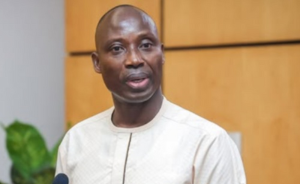
President John Dramani Mahama
President John Dramani Mahama has revealed plans by his government to return Ghana to both domestic and international capital markets as part of a broader agenda to restore macroeconomic stability and investor confidence.
Addressing business leaders and policymakers at the 2025 Ghana CEOs Summit in Accra, President Mahama said the move is being designed in collaboration with the International Monetary Fund (IMF), development partners, the Ghana Stock Exchange, and local banks.
According to him, the new borrowing strategy will be structured to support self-financing, commercially viable projects that generate their own repayment streams, rather than indiscriminate borrowing to fund consumption or politically expedient ventures.
“We’re working to reopen Ghana’s foreign markets in collaboration with the IMF and our development partners, the Ghana Stock Exchange and local banks,” the President said.
Borrowing must support value for money
In a sharp departure from past practices, President Mahama made it clear that under his administration, new debt would only be taken for projects that could pay for themselves through clear returns.
He emphasised that Ministries, Departments and Agencies (MDAs), Metropolitan, Municipal and District Assemblies (MMDAs), and State-Owned Enterprises (SOEs) would be responsible for ensuring that such projects are commercially viable, value-driven, and sustainable.
He explained that this approach was designed not only to ensure value for money but also to strengthen the country’s ability to repay debt without burdening future generations.
The strategy, he added, would foster a culture of accountability and discipline across public institutions.
A crisis inherited and mismanaged
President Mahama criticised the previous administration for dismantling the financial architecture that had kept Ghana’s debt on a sustainable path.
He said the country’s current predicament—being locked out of international financial markets and having to rely on short-term domestic treasury bills for funding—was a direct consequence of reckless policy decisions made between 2017 and 2022.
Ghana, he said, had never before defaulted on its debts since independence.
That unfortunate milestone, he noted, was reached during the last administration due to uncontrolled debt accumulation, a breakdown in fiscal discipline, and the abandonment of mechanisms like the sinking fund, which had previously been used to responsibly manage liabilities.
“Tragically, this architecture was dismantled. Between 2017 and 2022, debt accumulation skyrocketed, and yet the framework to ensure repayment was abandoned,” he said.
Lessons from 2013–2016: A record of fiscal innovation
Reflecting on his first term in office, Mahama reminded his audience that his administration had taken bold steps to deepen Ghana’s financial markets, both domestically and internationally.
He cited the introduction of medium- and long-term domestic bonds, the listing of those bonds on the Ghana Stock Exchange, and the establishment of the Central Securities Depository to increase liquidity and transparency in the market.
Working alongside Finance Ministers such as Dr Kwabena Duffuor and Mr Seth Terkper, and with the support of the Bank of Ghana and commercial banks, his government launched innovative instruments like a $200 million cedi-denominated domestic bond.
That bond, he said, was oversubscribed—demonstrating strong market confidence at the time—and was a product of their strategy of smart, prudent borrowing.
From 2013 to 2016, Ghana successfully issued four Eurobonds without default, all anchored in a well-structured sinking fund designed to ensure timely repayment. President Mahama revealed that his administration used over $335 million from the oil-funded sinking fund to settle maturing Eurobond liabilities.
He also recalled how the government refinanced the $200 million 2007 Eurobond inherited from the Highly Indebted Poor Country (HIPC) era through a 2015 bond guaranteed by the World Bank.
By the time he left office in January 2017, Mahama said Ghana had enough reserves to allow the incoming administration to pay off the remaining balance on the 2007 bond with ease.
“This was not magic. It was just discipline, and it was foresight,” he said.
Debt default and investor disillusionment
Mahama painted a bleak picture of what followed under the previous government. Ghana, he said, fell into unprecedented default on both domestic and external debts, leading to devastating consequences for investors, businesses, and pensioners.
He lamented the effects of the 2023 Domestic Debt Exchange Programme, which saw “crude haircuts” on bondholders’ investments, triggering a collapse in public trust and devastating individual livelihoods. Ghana’s credit rating was downgraded to junk status, while arrears in the public sector ballooned and credit access for small and medium-sized enterprises (SMEs) tightened.
According to Mahama, this crisis could not be blamed solely on global economic shocks. He pointed to other African nations with fewer resources that weathered similar global storms far more effectively.
In Ghana’s case, he argued, the real culprits were poor fiscal management, the opaque collateralization of statutory funds, and a general disregard for procurement and accountability rules.
Call for a national reset
The President stressed that a true national reset was required—one based on honesty, innovation, and a willingness to learn from the past.
He cautioned that simply continuing with the old playbook would only lead to further collapse.
“Let us be honest with ourselves. A true reset must begin by learning from what worked and what was recklessly abandoned,” Mahama said.
Despite the challenges, he expressed deep optimism about Ghana’s capacity to recover.
The key, he emphasised, was to avoid repeating past mistakes and instead embrace disciplined, forward-thinking reforms.
Completing the IMF programme with discipline
Central to Mahama’s proposed recovery plan is the successful completion of the IMF’s Extended Credit Facility (ECF) programme.
He pledged that his government would approach the remaining phases of the programme with strict fiscal discipline, staying on course with expenditure limits and borrowing targets.
He said the government expected to conclude the Fourth Review of the IMF programme by June 2025 and exit the programme entirely by the end of 2026.
After that, Ghana would enter a new phase of responsible engagement with the Fund, focusing on Article IV Consultations and adopting the IMF’s Policy Support Instrument (PSI)—a non-borrowing framework that signals fiscal credibility.
“This will mark Ghana’s return to responsible economic management,” he stated.
Optimism amid adversity
As he concluded his address to the nation’s top executives, President Mahama struck an optimistic tone.
“Ghana has what it takes to recover—not by repeating the mistakes of the past, but by learning from them and innovating for the future,” he declared.
His message was clear: while Ghana’s economic path may be steep and riddled with hard lessons, a new era of responsible borrowing, fiscal transparency, and market credibility is within reach—if the nation is willing to embrace discipline and reform.