Ghana stands on the brink of a potential financial disaster following the Mahama-led National Democratic Congress (NDC) government’s proposal to halve the royalty rate on the country’s lithium resources from the agreed 10%, secured by the previous New Patriotic Party (NPP) government, to five per cent.
The Africa Policy Lens has warned that this move could cost the nation between $210 million and $630 million over the projected 12-year life of the Ewoyaa Lithium Project, using the current price of Lithium at $1,600.

This will represent one of the most significant missed revenue opportunities in Ghana’s mining history.
The controversy stems from a mutual agreement reached by the NPP government and Barari DV Ghana Limited, which governs the terms of the lithium mining lease at the Ewoyaa project.
The agreement, ratified following Cabinet approval to review royalty rates, established a 10% royalty stake for Ghana—five percentage points above the previous rate in the main mining sector—ensuring that the nation maximised returns from one of its fastest-growing mineral sectors.
However, the NDC government, which in opposition had described the 10 per cent royalty as inadequate, has now proposed a reduction to 5 per cent, claiming the previous agreement was illegal.
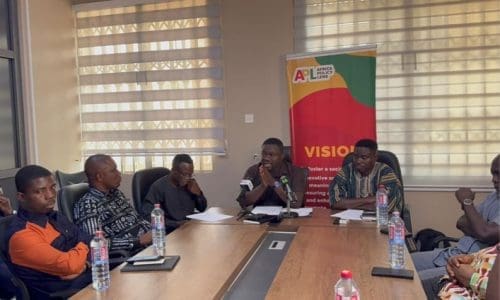
This contradictory stance has drawn sharp criticism from the Africa Policy Lens (APL), a think tank monitoring Ghana’s natural resource governance, which warned that the government’s move is tantamount to shortchanging the country and favouring the mining company over the state.
Financial implications are massive
According to the APL, even at lithium concentrate prices of $1,000 to $1,195 per tonne—the market range in November 2025—the Ewoyaa Project remains profitable for Barari DV Ghana Limited, with margins exceeding 40% per tonne.
At the benchmark price of $1,587 per tonne, with an all-in sustaining cost of approximately $610 per tonne, the project yields margins of roughly 6% per tonne before royalties.
The APL stressed that reducing Ghana’s royalty rate from 10 per cent to five per cent would effectively hand over between $210 million and $630 million in revenue to the company, based on an annual production of 350,000 tonnes over 12 years and lithium prices projected between $1,000 and $3,000.
Such a reduction would not only deprive the state of vital revenue but also set a dangerous precedent that could undermine future adjustments and trigger costly international arbitration.
“Temporary fluctuations in commodity prices must not serve as justification for weakening fiscal terms,” the APL warned. “
At prevailing and projected price levels, even a 30% royalty rate would not render the Ewoyaa Project unprofitable.
It follows, therefore, that the 10 per cent royalty rate is both economically rational and strategically necessary.”
Legal and policy considerations
The APL further highlighted that Section 25 of the Minerals and Mining Act, 2006 (Act 703), as amended by Act 900 of 2015, unequivocally empowers the state to determine royalty rates through regulation and contractual arrangements.
The previous government, acting fully within the law, negotiated the 10% royalty rate with Barari DV Ghana Limited in line with international best practices, aligning Ghana with leading lithium-producing countries such as Chile, Argentina, Australia, and Zimbabwe.
Act 900 explicitly preserved the royalty rates in force before its enactment until formally altered, meaning that the 10% rate agreed under the previous government cannot be arbitrarily reduced without violating established legal principles.
The APL dismissed claims by the Mahama government that the NPP acted illegally as misleading and unfounded, describing the proposed reduction as a move that could be construed as favouring the company at the expense of national interest.
Contradictions and criticism
Observers have expressed disbelief at the NDC government’s stance, pointing out the stark contradiction of criticising a higher royalty in opposition while now actively pursuing a reduction as the governing party.
The APL described the government’s justification—citing temporary declines in lithium prices—as “untenable” and a public relations spin that undermines state institutions and erodes fiscal discipline.
“The strange stance of the NDC and Mahama government has raised eyebrows, with many questioning how a government, which is supposed to defend the interest of the nation, is rather vehemently pushing for a reduced stake, contrary to its position in opposition,” the APL stated.
The stakes for Ghana
Beyond immediate revenue losses, experts warn that reducing the royalty rate risks weakening Ghana’s bargaining position in future mineral contracts, limiting the country’s leverage in securing fair and competitive fiscal terms.
It also opens the door to potential disputes under international investment treaties, granting companies legal standing to resist upward adjustments and complicating state efforts to protect the public interest.
“The proposed five per cent royalty rate, if implemented, represents millions of dollars effectively ceded to the company, with no mechanism for recovery. Such an outcome would exemplify a corruption-tainted mineral agreement frequently cited in natural resource governance discourse,” the APL added.
Call to Parliament and the public
In its statement, the APL urged Parliament to reject the NDC’s proposal, calling for ratification of the original lease secured under the NPP government.
The think tank emphasised that Ghana’s royalty regime must remain in line with international best practices, protect the sovereign interest, and ensure the country fully benefits from its mineral resources.
“It is particularly troubling that state institutions appear to be advancing public relations narratives favorable to a mining company rather than safeguarding the national interest,” the APL said.
“Citizens and anti-corruption agencies should closely monitor this issue to prevent the erosion of Ghana’s fiscal sovereignty.”
With the Ewoyaa Lithium Project projected to play a pivotal role in Ghana’s industrial and economic development, the stakes could not be higher.
The decision to maintain or reduce the royalty rate will determine whether Ghana secures a fair share of its natural wealth or relinquishes millions in revenue, undermining national development for the benefit of a single company.
The message from analysts is clear: lowering the royalty from 10 per cent to five per cent is not only economically irrational but politically and morally indefensible.
Ghana’s natural resources, they warn, should serve the people—not be shortchanged by a government willing to reverse agreements in favour of corporate interests.