
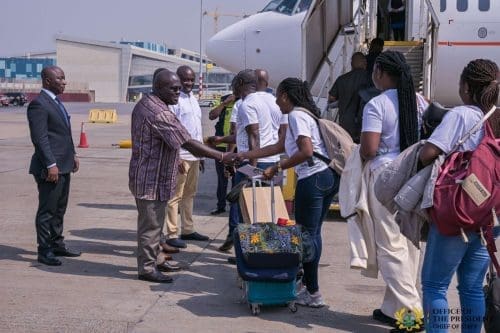
Ghana on Monday dispatched 121 nurses and allied healthcare professionals to Antigua under the Ghana Labour Exchange Programme (GLEP), a government-led initiative to create jobs while addressing workforce imbalances at home.
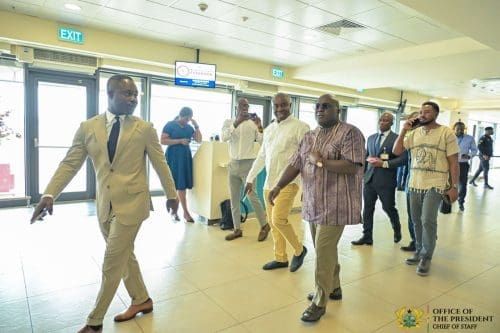
The group of health workers, seen off by Chief of Staff Mr. Julius Debrah, Health Minister Mr. Kwabena Mintah Akandoh, and Minister of State in Charge of Special Initiatives Mr. Emmanuel Kwadwo Agyekum at Kotoka International Airport (KIA), represents one of the first batches deployed to partner countries facing labour shortages.


Launched in 2025, GLEP is designed to facilitate legal, structured and ethical international placements for both skilled professionals — including nurses, doctors and IT experts — and unskilled workers such as labourers and farm helpers, with the twin aims of reducing unemployment and boosting foreign exchange earnings.
Mr. Akandoh described the programme as a key component of President John Dramani Mahama’s job creation agenda, pointing to a significant backlog of trained health professionals who remain unemployed in Ghana.
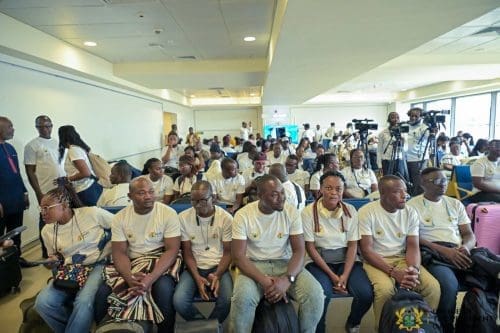
“We inherited more than 70,000 health professionals who have completed various degrees and yet are at home without employment,” the Minister said, citing official figures.
Official disclosures from the Ministry of Health show that more than 70,000 trained health professionals — including nurses, allied health workers and doctors — are currently seeking jobs.
According to the latest projections, if recruitment into the health sector continues at current rates without additional interventions, the number of unemployed trained health workers could rise to as high as 180,000 by 2028.
Despite these statistics, Mr. Akandoh sought to dispel the notion that Ghana lacks health workers, emphasising that the root problem is absorption into the domestic health system due to fiscal and budgetary constraints.
He explained that while some health professionals will be employed locally, others are being matched with opportunities abroad where their skills are urgently needed.
“We are exploring avenues where countries have requested our health professionals to work with them,” he said, noting ongoing talks with Jamaica, Barbados and Trinidad. “Today is about Antigua; we are doing this in batches.”
The officials urged the departing nurses to carry the Ghanaian flag with professionalism and diligence in their host country, stressing that they remain ambassadors of the nation.
Youth unemployment
The deployment comes at a time when Ghana’s broader unemployment challenge — particularly among young people — remains acute.
According to labour force data from the Ghana Statistical Service (GSS), the national unemployment rate averaged around 12.8 – 13.6% in 2025, with rates significantly higher among youth.
In the third quarter of 2025, more than 1.3 million young Ghanaians aged 15 – 24 — representing about 21.5% of that age group — were not in employment, education or training (NEET), and youth unemployment (ages 15–24) averaged over 32%, far above the national average.
Despite modest improvements in overall employment, these figures highlight persistent barriers for first-time jobseekers and graduates entering the labour market.
The mismatch between graduate output — particularly in health and education — and the public sector’s capacity to absorb new workers has become a growing policy concern.
Policy response and future prospects
Government officials say GLEP and similar initiatives are intended not only to ease immediate unemployment pressures but also to build Ghana’s global workforce reputation while remittances and foreign exchange inflows grow.
Mr. Agyekum reiterated that any skilled Ghanaian willing to participate in the programme is eligible, stressing that GLEP seeks to benefit citizens across sectors.

Analysts, however, warn that while international placements offer temporary relief for job seekers and may boost foreign exchange earnings, long-term solutions will require stronger domestic job creation, private sector expansion and strategic alignment between training output and employment absorption capacity.
As Ghana navigates these challenges, the deployment of health workers abroad underscores the complexity of balancing domestic public service delivery with global labour market opportunities.